Image
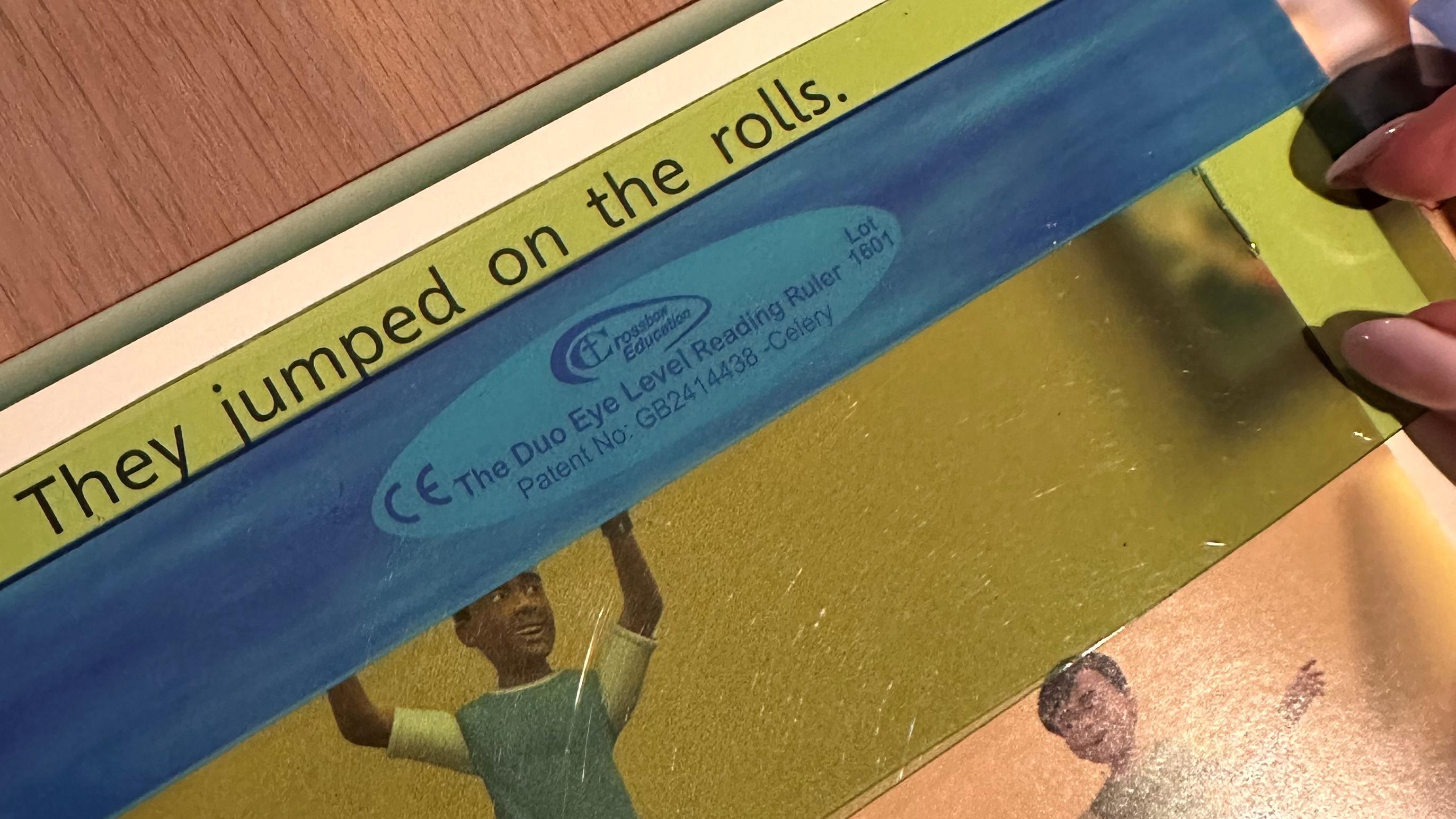

Within the Foundation Stage, the development of phonological, orthographic and morphemic awareness are essential prerequisites of both reading, spelling and writing.
Phonological awareness can be a predictor of later reading achievement and phonemic awareness can develop as a result of learning to read.
The beginning reading programme should ensure that all sources of knowledge are taught simultaneously and from the start of learning to aid efficient memory storage and retrieval:
A pupil who is displaying signs of significant literacy difficulties in reading and requires substantial repetition and overlearning should be identified and supported as early as possible. A cumulative, structured, sequential, multisensory, phonics-based programme of learning should be introduced, which teaches phonics at the alphabetic and orthographic level alongside a reading programmes which ensures all of the reading skills are developed at a compatible level, taking account of the significance of working memory and orthographic processing difficulties.
Phonological Awareness refers to awareness of not just smaller units of sound in the spoken word, (phoneme) but the larger units of sound; syllables and intra-syllabic units (onset and rime).
Phonological awareness can be a predictor of later reading achievement and phonemic awareness can develop as a result of learning to read. A skilled reader sounds out a word a few times and remembers it so if the word appears again in text, it will be recognised and the associated sounds and meaning activated. A pupil displaying learning difficulties may have a poor working memory and a weakness in the phonological processor and may not be able to hear, manipulate and unitise phonemes in his / her head. Or the pupil may have a weakness in orthographic processing (recall of patterns in words) which impacts on his / her visual memory of words. Partial or incomplete images are stored in memory and if the word is seen again, it may not be recognised as being familiar. Pupils with these difficulties need a secure visual memory of ‘anchor words’ such as, ‘it’, ‘in’ and ‘an’ to enable the development of phonemic awareness. Most pupils learn implicitly as they read, however a pupil with a phonological or orthographic processing difficulty will require explicit teaching in recognising whole words as he / she begins to read. Working memory difficulties impact on a pupil being able to hold and manipulate more than two phonemes in memory, therefore onset and rime patterns scaffold learning as there are fewer sounds to recall in each chunk of the word.
Reading, phonological awareness, phonics and spelling are interconnected and therefore best practice indicates the need to provide an integrated system of teaching phonics at the phoneme / grapheme, syllable, onset and rime and whole word level is essential. The pupil can learn to link the visual (orthographic) and auditory (phonological) memory of key words within a structured, cumulative, sequential, multisensory and phonics-based approach, with new learning carefully controlled to ensure that the pupil is enabled to experience success working within the structure of known words and sounds.
The alphabet arc is a resource which scaffolds the pupil’s learning, as he / she manipulates cvc words with similar rime patterns:
The pupil can, with continual rehearsal, develop metacognitive skills which they can then apply to the manipulation of ccvc / cvcc and other words with similar rime patterns. The teacher first models how to change initial and final sounds / blends and the pupil continues to apply this skill in a scaffolded learning environment. For pupils with literacy difficulties the vowel sound is best learned when linked to the rime of the word, for example, hat, hot, hit. A pupil with a visual impairment may find it difficult to see how the mouth is articulated when pronouncing the sounds and so will need additional practice of learning the sounds through incorporating listening and rhyming activities, letter identification games and movement songs / activities.
If a pupil experiences a problem with the sounds in the language and difficulty following instructions when not embedded in a routine, he / she may have a Developmental Language Disorder (DLD) and can also be scaffolded through a sequential, cumulative, structured, multisensory phonics-based approach.
| Impact on Reading | Recommendations for Reasonable Adjustments |
|---|---|
The pupil is not recognising the difference between a word and a sentence
|
|
Pupil is unable to decode phonetically regular words
Pupil is guessing words in a sentence
The pupil is relying only on the picture cue to attempt a word and is not looking at the initial letter or scanning across the word for familiar sounds
Pupil is not pointing at words and tracking across a sentence
|
|
The pupil may have difficulties with counting syllables in a word
|
|
| A pupil may be unaware of the grammatical structure of a simple sentence, this can impact on reading fluency |
|
A pupil may need to be explicitly taught that words carry information. This can be modelled by questioning A pupil may have difficulties understanding what a question is and what the response should be The pupil may have a limited knowledge of word meanings |
|
Pupil is unable to identify the sounds in words making it difficult to manipulate or blend them
Sounds, especially vowel sounds are not pronounced correctly, decoding is incorrect for example reads ‘jug’ for ‘jog’
|
EA Guidance Video: Reading in structure - single words (3:13 mins)
|
The pupil may have difficulty in discriminating between final consonant sounds such as /d/ or /t/, for example reads ‘cot’ for ‘cod’
The pupil may not be able to identify words that rhyme |
|
The pupil’s reading lacks fluency and accuracy
|
|
Visual processing refers to how the brain processes and interprets visual information. Visual tracking is how the eyes follow the visual information to interpret it. To have a visual processing and tracking difficulty is when the eyes are unable to feedback the visual information accurately such as identifying information from pictures or reading text. It may focus on difficulties with saccadic eye movements where the pupil experiences difficulty reading smoothly ‘through’ individual words or where there appears to be difficulty with the smooth movement of eyes while reading along lines of text. Other difficulties may involve the ability of eyes to ‘team’ (work together with the same point of focus) while reading text. Where these types of difficulties are apparent, referral to an optician is always advised.
| Impact on Reading | Recommendations for Reasonable Adjustments |
|---|---|
The pupil may have a difficulty in understanding left to right orientation
The pupil may struggle to learn new vocabulary
|
EA Guidance Video: Reading in structure - single words (3:13 mins)
|
| The pupil may lose his / her place easily or skip a line |
|
| The pupil may have difficulty discriminating between a word and a sentence |
|
The pupil may be unable to remember what particular letters look like, recall High Frequency Words (HFWs) or topic words
Sounds and letters mixed up when decoding (b/d/, p/q/) |
Ensure these mnemonics are explicitly explained. Do not assume prior knowledge has been linked. English readers, read letters left-right across the page. A pupil may be confused as the ball could sit on either side of the bat. Explain that you draw the bat first and then the ball (left to right).
|
Confuses easy words, for example, ‘a,’ ‘in,’ ‘the,’ ‘it’
Omits ‘little’ words, like ‘in’ and ‘on. Omits affixes such as ‘s’
The pupil may add in ‘little’ words
|
|
The pupil may have a difficulty with recognising word patterns
The pupil may have a difficulty remembering a sequence of letters
He / she may transpose letters when reading, such as reading ‘saw’ for ‘was’ or ‘stop’ for ‘spot’
|
|
To be a good reader, strong visual and verbal working memory skills are beneficial. Pupils with poor working memory capacity find decoding of words mentally exhausting. They find it challenging to keep the relevant speech sounds long enough ‘in mind’ to blend them, and in doing so decode the word. They may struggle to hold all the words in their mind to read and understand a sentence. Good readers only require several exposures to a word before they can read it automatically. However, pupils with visual working memory difficulties cannot recognise words quickly despite frequent exposure to the words. This is known as ‘frequency insensitivity.’
| Impact on Reading | Recommendations for Reasonable Adjustments |
|---|---|
The pupil may have difficulty with word recognition of regular cvc / ccvc words
The pupil struggles to hear sounds in sequence within a cvc and cvcc word
|
|
The pupil may have slow recall of High Frequency Words
|
|
| The pupil may have difficulty storing and retrieving grapheme / phoneme knowledge |
|
The pupil’s sensitivity to orthographic patterns may be limited (letter patterns)
He / she may have difficulty unitising phonemes in a word
He / she may have difficulty specifically with the vowel sound in words |
/s/-/t/-/a/-/m/-/p/
|
The pupil’s reading fluency is effortful and not automatic
Vocabulary knowledge is limited
|
|
The pupil may struggle to hold all the words read in memory long enough to extract the meaning of a text. As a result, he / she loses interest and disengages from reading
|
|
Slow processing speed is when pupils need additional time to take in, understand and respond to visual or oral information. Slow processing speed difficulties can be apparent in pupils with co-occurring difficulties, such as ADHD and DLD and this will impact on their ability to read with automaticity.
| Impact on Reading | Recommended for Reasonable Adjustments |
|---|---|
The pupil may read slowly and have little expression
Reading takes longer due to poor sight vocabulary and slow decoding of words |
|
The pupil may attempt to sound out every phoneme even when he / she recognises the word on sight
|
|
The pupil may have word finding difficulties when responding to a comprehension question
He / she may struggle to write down his / her answer but may understand the content
|
|
The pupil’s attention may be impacted
|
|
Orthography is the established spelling or representation of words in a written language (this includes spelling, punctuation, capitalization). Orthographic Knowledge is knowledge of clusters of letters that represent sounds blended as units. This can be at onset and rime, syllable or whole word level. Orthographic mapping is a mental process and is the ability to permanently store words to be retrieved automatically (immediately and effortlessly) from memory. To have orthographic difficulties will impact on a pupil’s ability to recognise words and to read fluently. This will also impact on spelling and writing.
| Impact on Reading | Recommendations for Reasonable Adjustments |
|---|---|
The pupil may have a difficulty in recognising patterns in words and is insensitive to these words in reading and spelling
|
|
Difficulty in retaining High Frequency Words / Sight words
Guesses simple words |
|
Over-reliance on decoding even when it is apparent, he / she knows several of the key words
|
|
| The pupil may be unable to proficiently connect phonemes in the spoken word to graphemes in the written form |
|
| The pupil may frequently misread the order of letters and read inaccurately, for example ‘form’ for ‘from’ |
|
Sight words are words that pupils can read unconsciously and effortlessly without sounding out. High frequency words (HFWs) are words that appear often in a text and should be read automatically once a pupil can read them immediately ‘on sight’ they become sight words. There are HFWs that can easily be decoded, some that contain phonetically decodable parts and some that are completely irregular and cannot be phonetically decoded. Very often, pupils with literacy difficulties will find learning HFWs a struggle as the words tend to be abstract or phonetically irregular and they find it difficult to attach meaning to such words.
| Impact on Reading | Recommendations for Reasonable Adjustments |
|---|---|
The pupil finds it difficult to learn sight words
He / she guesses the word
The pupil misreads HFWs persistently
|
|
| A pupil may be unable to retain High Frequency Words taught in the previous lessons |
|
The pupil may struggle to recall what a specific letter looks like, HFW or topic word
The pupil may have visual processing difficulties which will lead to further confusions with letters, such as, ‘b’, ‘d’, ‘p’, ‘q’ |
Ensure these mnemonicsare explicitly explained. Do not assume prior knowledge has been linked. English readers, read letters left-right across the page. A pupil may be confused as the ball could sit on either side of the bat. Explain that you draw the bat first and then the ball (left to right).
|
Reading comprehension is strongly linked to listening (oral vocabulary) and understanding (decoding words). As pupils are introduced to a rich vocabulary environment, opportunities to read and tell stories, poems and rhymes are central to developing a pupils’ vocabulary, which will impact on their later reading, spelling and writing skills. Pupils with literacy difficulties very often are so focused on decoding the word they do not ‘take-in’ the meaning of the word / sentence or short story. It is important to check that pupils with literacy difficulties, co-occurring difficulties or newcomer pupils understand what they are reading at a more meaningful level. The pupil needs to develop:
| Impact on Reading | Recommendations for Reasonable Adjustments |
|---|---|
The pupil may have difficulty with word recognition (retrieving from memory) which impacts on comprehension of the text
He / she may have word finding difficulties when answering questions about a text
|
EA Guidance Video: Reading in structure - single words (3:13 mins)
|
The pupil may read words proficiently but have difficulty understanding the text
The pupil may have difficulty understanding ideas of a story |
|
A pupil may have a limited vocabulary knowledge which makes comprehension of text very difficult
A pupil may have a limited range of vocabulary and oral language may be underdeveloped
|
|
The pupil may have a slow reading pace and lack fluency
|
|
A balanced and integrated approach to teaching reading and spelling will lead to a more inclusive learning environment.
Some pupils will learn to read implicitly through exposure to words and text. A pupil with literacy difficulties, however, needs to be explicitly taught both from a (bottom-up approach), beginning with alphabetic knowledge, whole word recognition and onset and rime patterns, while at the same time developing a (top-down) knowledge of vocabulary, sentence structure and meaning of text. All the processes in individual word reading need to operate together and interact with each other to ensure comprehension. It is only when the pupil has become secure in recognising some letter sounds and names, and has ‘anchor words’ to rely on, that the initial letter can be manipulated and the structure of words becomes more apparent. Comprehension of text becomes more attainable, and fluency and expression may develop. The importance of an interactive and interconnected model of reading has been proposed, in order to support a pupil with phonological, orthographic and memory difficulties.
The following professional learning modules may be helpful for additional information regarding the strategies recommended in this chapter. They are provided by the Literacy and Language and Communication Services and are available through Children and Young People's Services Professional Learning Programme, which is hosted on the EA website. Professional Learning Modules for Understanding Receptive and Expressive Language are offered by the Language and Communication Service. The access code to the courses is updated each year and shared with your Principal in September:
Department of Education (DE) (2008) ‘Every school a good school, A Strategy for Raising Standards in Literacy and Numeracy’. Bangor: DENI
Department of Education, (2009) ‘The Way Forward for SEN and Inclusion’
Department of Education, (2011) ‘A Resource File for Schools to support children with special Educational needs’
Department of Education (2011) ‘Count Read Succeed’. Bangor: DENI
Department of Education, (2012) Every school a good school, SEN and Inclusion’ Consultation document
Deheane, (2013) ‘How the brain learns to read’.
Duke, N. K., & Cartwright, K. B. (2021). ‘The science of reading progresses: Communicating advances beyond the simple view of reading’. Reading Research Quarterly, 56, S25-S44. https://ila.onlinelibrary.wiley.com/doi/epdf/10.1002/rrq.411
Education Endowment Foundation (2018) ‘Preparing for Literacy: Improving Communication, Language and Literacy in the Early Years’, London: Education Endowment Foundation.
Frith, U. (2020) ‘Dyslexia: learning to read in Italian’. Video. Accessed 5/10/22 https://www.youtube.com/watch?v=bYrxiqq9gsU&t=1s
Hogan, T., Bridges, M., Justice, L. and Cain, K. (2011) ‘Increasing Higher Level Language Skills to Improve Reading Comprehension’, Focus on Exceptional Children’ 44 (3), pp.1–19.
Kirkpatrick, D. (2016) ‘Equipped for Reading Success: A Comprehensive, Step-by-Step Program for Developing Phonemic Awareness and Fluent Word Recognition’. New York: Casey & Kirsch Publishers
Lavan, G & Talcott, J. B, (2021). ‘BROOK’S WHAT WORKS FOR LITERACY DIFFICULTIES’
McMurray, S. (2020) ‘A resource for schools to support children who may have Special Educational Needs: The beginning reading programme: the importance of a balanced approach’
McMurray, S. (2020) ‘A resource for schools to support children who may have Special Educational Needs: The importance of an integrated approach when learning to spell’
McMurray, S, and Fleming C. (1998, 2006) The “Complete Spelling programme (CSP) Spelling and Language Programme”, (3rd Edition, 2014) The Read Write Company Limited
McMurray, S. and Thompson, R. (2016) ‘Issues in Inclusion and Individual Learning Needs Learning to Read’. Journal of Research in Special Educational Needs. Volume 16, Number s1, 679‐683 doi: 10.1111/1471‐3802.12200
Wyse, D. & Bradbury, A. (2021) ‘Reading wars or reading reconciliation’. Free to read at: https://bera-journals.onlinelibrary.wiley.com/doi/epdf/10.1002/rev3.3314