Image

The SEND Act (NI) 2016 The Special Educational Needs and Disability Act (NI) 2016 strongly focuses on listening to the voice of the child; and on the participation of children, young people, and their parents in decision-making. There is equally a strong focus on improving and measuring outcomes for children & young people with Special Educational Needs and / or disabilities (SEND).
As pupils move through education, they become more aware of their strengths and weaknesses, how they learn, and what strategies help them to learn best. All pupils with SEND have the right to give their views. It is important that we actively seek the views of the pupil, involving pupils in planning some of their activities and working from their strengths and preferences. It is important that pupils are:
This allows pupils to see that their opinions and presence in the school are valued and have been recognised, creating trust and respect between pupils and the school.
| Pupils may... |
|
| Teachers can... |
|
| Schools will... |
|
| Pupils may... |
|
| Teachers can... |
|
| Schools will... |
|
| Creative and arts-based methods | Drawings, photographs, drama, role play, mind maps, models |
| Assistive and augmentative communication | Picture Exchange Communication System (PECS), Makaton, iPad, Apps |
| Electronic communication | Text, email, blogging, video diaries, iPad recordings |
| Traditional methods | Interviews, discussions, focus groups, questionnaires, surveys, school council, suggestion boxes |
Models of participation can be used to support schools in baselining and auditing of current practices in relation to pupil voice. Descriptions of three models can be found in ‘Seeking the Views of the Child: A Resource for Schools and Services’ CYPS SEND Team, 2019. The Personal Learning Plan (PLP) Guidance for Schools (Section Four).
Effective communication with parents / carers is an essential component of creating a positive learning environment, as an effective working partnership will be the best way to support the pupil’s learning and emotional wellbeing. Parents / carers should be made aware of the provision the school is putting into place to support the pupil, and of how they can support the pupil at home. Communication should be two-way so that parents / carers know how to express any concerns promptly. Parents provide valuable background medical, physical or emotional information which will often explain the difficulties the pupil may be experiencing - it is vital that parents are listened to and included.
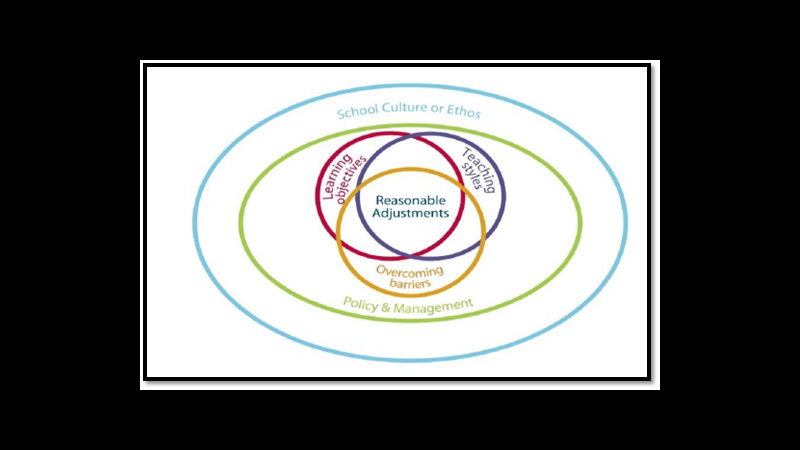
All pupils have the right to a broad and balanced education. Every day, teachers and school staff show dedication, imagination, skill and empathy in their work with pupils. This section aims to share and promote best practice for inclusion of all pupils with a variety of different learning needs. The table and infographic below summarise how inclusive cultures, policies and practices help schools to make reasonable adjustments to support pupils with a variety of learning needs.
| Inclusive Ethos | Inclusive Policies | Inclusive Practices |
|---|---|---|
A welcoming environment A ‘can do’ attitude from all staff A proactive approach to identifying barriers and finding practical solutions Strong, collaborative leadership and relationships built upon trust and respect
Celebration of differences Awareness of flexible learning preferences | Effective staff training and development A positive behaviour approach Role models and positive images of disability Practical support for pupils in class Support for classroom assistants Support for parents | Teaching and learning activities Planning to make reasonable adjustments for pupils
Awareness of flexible learning preferences Use of inclusive technology Overcoming barriers to learning |
Figure 1: Accessibility Planning Guidance for Schools-Children and Young People’s Services from the SEND Implementation Team Document.
Every school should aim to be an inclusive school. The ‘School Improvement Plan Model’ promotes school effectiveness by improving the educational experience of all pupils to raise standards. Where any pupil (with or without SEND) fails to thrive then the focus should be on the environment and not on the individual child. If the environment is not conductive to their learning or equally if the teaching approach is not working for pupils, then it should be adapted to ensure an equitable system.
High quality teaching is best achieved in an inclusive classroom and where pupils’ difficulties are identified early and appropriately met.
Inclusive teaching of literacy should be balanced, multisensory, structured, sequential, cumulative and phonics based. Some pupils will require significant overlearning at a slower pace. Disability Discrimination Code of Practice for Schools and Good Practice Guidelines for Schools
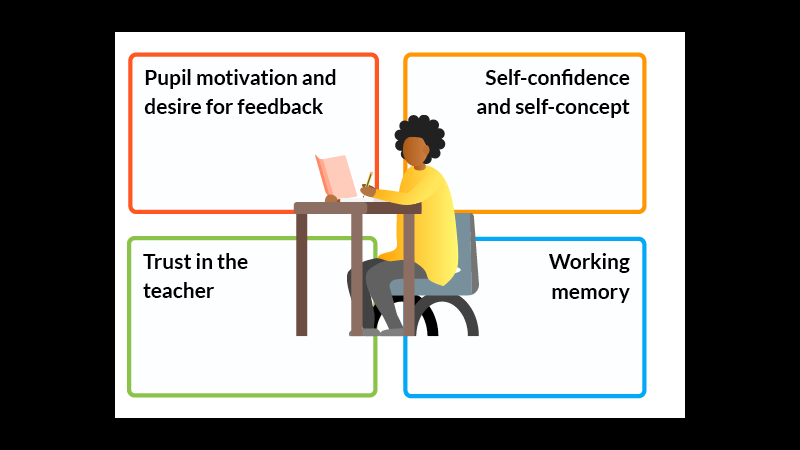
Figure 2: Factors that may influence a pupil’s use of feedback
Read and Write Quick Reference Guide for Google Chrome
Read and Write for Windows: Support Tools for Students with Dyslexia
Colour-coded timetables, folders and books can be useful for different subjects: Editable coloured timetable
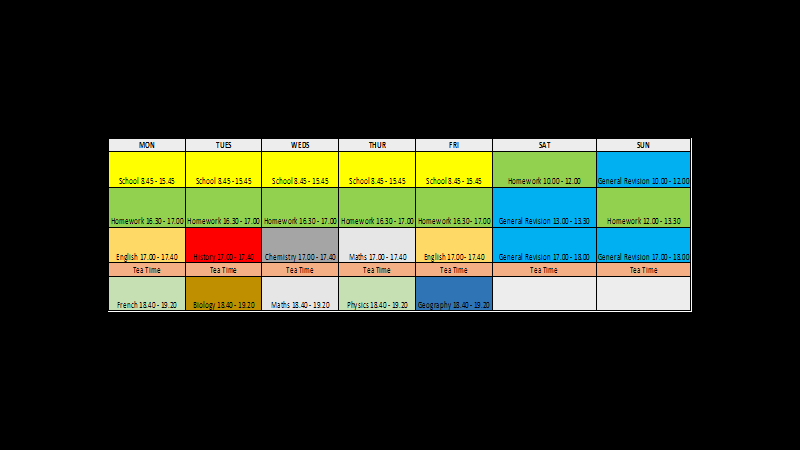
Accommodation should allow full access to the curriculum and should be carefully considered to ensure learning expectations are not reduced. It is important to have ambitious curriculum goals however break goals into smaller steps and increase the time limit for the pupil.
Read and Write for Windows Support Tools for Students with Dyslexia
Teacher Guidance: Microsoft Dictate Help Sheet

Read and Write for Windows Immersive Reader
The term ‘neurodiversity’ helps to promote the understanding that brains are diverse, and differences in how we think, learn, and behave should be accepted as a normal part of human variation. Neurodiversity is an umbrella term that includes all Specific Learning Difficulties, many of which can co-occur.
ADHD is a neurodevelopmental disorder which presents with behavioural symptoms such as inattentiveness, hyperactivity, and impulsiveness. Individuals with ADHD can have many strengths alongside their difficulties, such as increased creativity and problem-solving abilities. Pupils with ADHD may have additional problems such as anxiety, depression, and sleep disorders.
Autism is a developmental condition that impacts how individuals think about and experience the world. Pupils with Autism often have difficulties with communication, social and emotional skills. They may also display sensory difficulties, finding things like loud noises or bright lights uncomfortable for example. The severity of the presentation of the pupil / young person with Autism, may vary across individuals with the same diagnosis.
Developmental Language Disorder (DLD) was previously known as Specific Language Impairment (SLI). The term DLD is used for pupils with persistent and unexplained language difficulties which impact on their social and educational functioning. There is no obvious reason for these difficulties, and they are not due to another condition such as Autism or a hearing impairment.
DCD (also known as Dyspraxia) is a condition affecting physical coordination. This can manifest itself in difficulties in tasks involving fine and / or gross motor coordination, such as writing, riding a bike, self-care, and play. Pupils with DCD have difficulties learning the movements required to carry out activities and with transferring motor skills to new tasks.
Some pupils experience visual difficulties when they read, such as blurred text, difficulty in following text, headaches and illusions of written text moving. Anyone experiencing such difficulties should be assessed by a registered optometrist.
Hearing impairments can affect a pupil’s ability to develop speech and language skills such as expressive and receptive communication. This can have a corresponding impact on his / her progress in learning to read and write.
Pupil Support Services provide support to schools, parents / carers, children, and young people on a range of special educational and medical needs. The EA Services deliver extensive programmes which assist schools in their responsibilities in supporting children and young people with SEN and medical needs. General advice and guidance on Special Educational Needs can be accessed through the link below: Special Educational Needs (SEN)
Autism Advisory and Intervention Service (AAIS)
The Autism Advisory and Intervention Service (AAIS) is a regional service that provides advice and support for pupils with Autism.
The Sensory Service is a regional service to support children and young people who are deaf and / or hard of hearing, Vision Impaired (VI) or Multisensory Impaired (MSI).
Language & Communication Service (LCS)
The EA Language & Communication Service (LCS) supports pupils with identified language difficulties as a primary area of need.
SEN Inclusion Service
The EA SEN Inclusion Service supports the effective inclusion of children and young people with learning and medical needs.
Special Educational Needs (SEN) Resources
SEN Inclusion Service Guidance and Resources
SEN Early Years Inclusion Service (SEN EYIS)
The Special Educational Needs Early Years Inclusion Service (SENEYIS) provides support for pre-school children who have special educational needs and disability (SEND).
They support the educational development of pupils with SEND arising from one or more identified learning need in the areas of cognition and learning (C&L), speech, language and communication (SLCN) and/or social, behavioural, emotional and wellbeing (SBEW).
They work in partnership with children, early educational setting / pre-school staff, parents or carers, and other professionals.
The following professional learning modules may be helpful for additional information regarding the strategies recommended in this chapter. They are provided by the Literacy Service and are available through the Children and Young People's Services Professional Learning Programme which is hosted on the EA website. The access code to the courses is updated each year and shared with your Principal in September:
Azorin, C and Aincow, M, 2018 “Guiding Schools on Their Journey Towards Inclusion” International Journal of Inclusive Education24(1):58-76
British Journal of Special Education, Vol 29 (1), pp. 29-36 Masten and Barn
Booth T. 2018. ‘Mapping Inclusion and Exclusion: Concepts for all? In Towards Inclusive Schools?’ Edited by C. Clarke, A. Dyson, and A. Millward, 96-100
DE: (2009): Every school a Good school, a Policy for School Improvement
DE: (2008): Every school a Good school, A Strategy for Raising Standards in Literacy and Numeracy
DE (2011): Count Read Succeed. Bangor: DENI
DE, (2009): The Way Forward for SEN and Inclusion
DE, (2012): Every school a Good school, SEN and Inclusion Consultation document
DE, (2012): Every school a Good school, Summary report to responses to consultation document
DE, (2011): ‘A Resource File for Schools to support children with special Educational needs’
Elliott, J. and Grigorenko, E. (2014): The Dyslexia Debate. New York: Cambridge University Press.
Humphrey, N. (2002), ‘Teacher and pupil ratings of self-esteem in developmental dyslexia’
McMurray, S. (2020). A resource for schools to support children who may have Special Educational Needs: The importance of an integrated approach when learning to spell
McMurray, S, and Fleming C. (1998, 2006) The CSP Spelling and Language Programme, (3rd Edition, 2014) The Read Write Company Limited
McMurray, S. and Thompson, R. (2016) Issues in Inclusion and Individual Learning Needs Learning to Read. Journal of Research in Special Educational Needs. Volume 16, Number s1, 679‐683 doi: 10.1111/1471‐3802.12200
McMurray, S. (2002) The Harberton Reading Programme. EA (Belfast Region) Reprographics Departments, 2018
Reid, G. (2010) Learning Styles and Inclusion. London: Sage Publications Ltd
Seeking the Views of the Child: A Resource for Schools and Services CYPS SEND Team, 2019
Together Towards Improvement, ETI (Education and Training Inspectorate) (2011)