Image

Age 11 -16
Reading difficulties may often persist at the post primary level and the gap in reading ability can widen. The pupil immediately becomes exposed to subject-specific vocabularies. A pupil with specific literacy difficulties may need to be explicitly taught new vocabulary within each subject area. It is important that all pupils have equitable access to reading material and to do this effectively one needs to consider the individual pupil’s barriers to learning and consider what accessibility tools may be appropriate.
A pupil with literacy difficulties may have additional co-occurring diagnosis such as Autism, Attention Deficit, Hyperactivity Disorder (ADHD), Developmental Coordination Disorder (DCD), Dyspraxia or Executive Function Difficulties. The pupil may have hearing difficulties or have accessibility difficulties as a newcomer pupil. Any of these co-occurring diagnosis or circumstances may exacerbate the literacy difficulty and may have a significant impact on how well the pupil accesses the curriculum. Effective reading strategies and comprehension strategies need to be taught within lessons so that pupils become familiar with consistent and structured routines.
Indicators of reading difficulties in post primary:
Many of the sources of knowledge introduced in Foundation Stage, Key Stage 1 and 2 continue to be relevant as are the strategies which develop the pupil’s metacognition:
Phonological Awareness - the ability to recognise smaller units in the spoken word at the phoneme, syllable and onset and rime
Orthographic knowledge - awareness of patterns or clusters of sounds in the written word
Fluency - the ability to read with speed, accuracy and expression
Vocabulary - the body of words used in a particular language
Comprehension - the ability to understand what has been read
Print Awareness - Awareness of authorial techniques, relevant parts of a book, for example, glossary or index
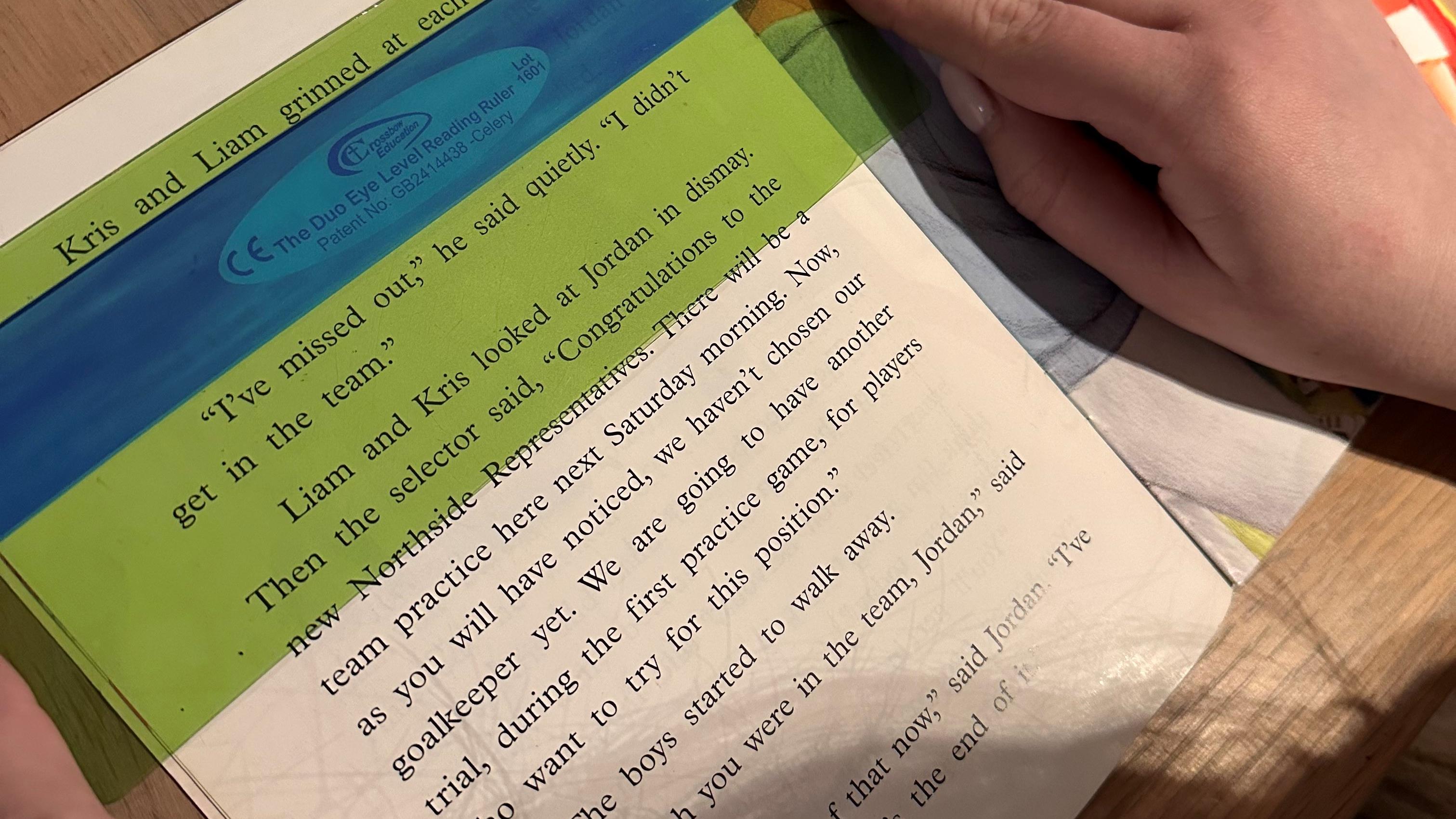
Visual processing difficulties often continue to affect pupils reading in the post primary sector. Visual tracking describes how the eyes follow the visual information to interpret it. To have a visual processing and tracking difficulty implies the eyes are unable to feedback visual information accurately such as identifying information from pictures or reading text. It may focus on difficulties with saccadic eye movements where the pupil has trouble reading smoothly ‘through’ individual words or where there appears to be difficulty with the smooth movement of eyes while reading along lines of text. Other difficulties may involve the ability of eyes to ‘team’ (work together with the same point of focus) while reading text. Where these types of difficulties are apparent, referral to an optician is always advised.
| Impact on Reading | Recommendations for Reasonable Adjustments |
|---|---|
| The pupil may have difficulties keeping his / her place in a text |
|
| The pupil may guess at words rather than reading carefully across a word |
|
| The pupil may struggle to read texts or information presented in different formats or fonts |
|
A good reader relies heavily on strong working visual and auditory memory skills. Good readers only require several exposures to a word before they can read it automatically. Working memory relates to the ability to hold and manipulate visual and auditory information ‘in the mind’ over short periods of time. It is known that many pupils who experience learning difficulties have poor working memory and that this form of memory plays a crucial role in our ability to effectively store and retrieve information. The capacity of working memory differs among pupils, and many may demonstrate lower than expected recall of words and sounds (when decoding test) which are commonly known by their peers.
| Impact on Reading | Recommendations for Reasonable Adjustments |
|---|---|
The pupil may struggle to decode an unknown word in text
The pupil may struggle with word recognition due to a difficulty transferring the correct image of a word to long-term memory |
|
The pupil may struggle to remember what they have just heard The pupil may disengage because the pace of the lesson is too fast The pupil may not know what he / she can do to help make the learning process easier The pupil may have difficulty remembering what he / she thinks about a text as it is forgotten or becomes jumbled |
|
| The pupil may struggle to comprehend the text as the working memory is overwhelmed by the effort of decoding |
|
The pupil may struggle to remember sequences of information to be learned
The pupil may struggle to hold a list of instructions in his / her head, although can perform all tasks when told individually |
|
Slow processing speed is when pupils need additional time to take in, understand and respond to visual or oral information. Slow processing speed difficulties can be apparent in pupils with co-occurring difficulties, and this will impact on their ability to read with automaticity.
| Impact on Reading | Recommendations for Reasonable Adjustments |
|---|---|
A pupil may be unable or reluctant to answer questions in the classroom
The pupil may have difficulty processing information at speed |
|
| A pupil may have withdrawn totally from any group work |
|
| The pupil may struggle to respond to oral comprehension questions or questions asked in different subject areas |
|
Orthographic knowledge refers to how spoken language is represented in writing. Accurate word identification requires a pupil to know which letters combine to form it, and so orthographic knowledge enables fluent reading by enabling the pupil to recognise words quickly and automatically.
| Impact on Reading | Recommendations for Reasonable Adjustments |
|---|---|
| The pupil may find it difficult to recognise patterns in print and as a result may be unable to apply this knowledge to unfamiliar words |
(still may be relevant Year 8-10)
Stage 1
Stage 2
Stage 3
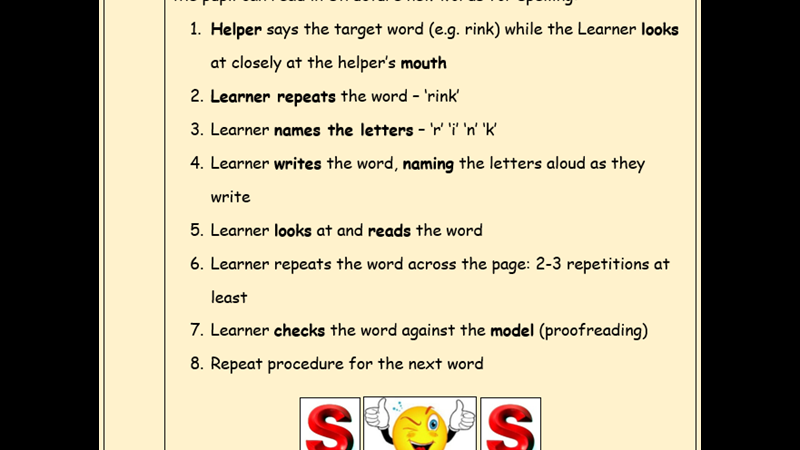
Use Simultaneous Oral Spelling (SOS) Routine when learning spellings in structure as this repetitive process of learning a new word helps develop automaticity in both reading and spelling: |
| The pupil may find it difficult to recall a specific HFW or topic word |
Image
|
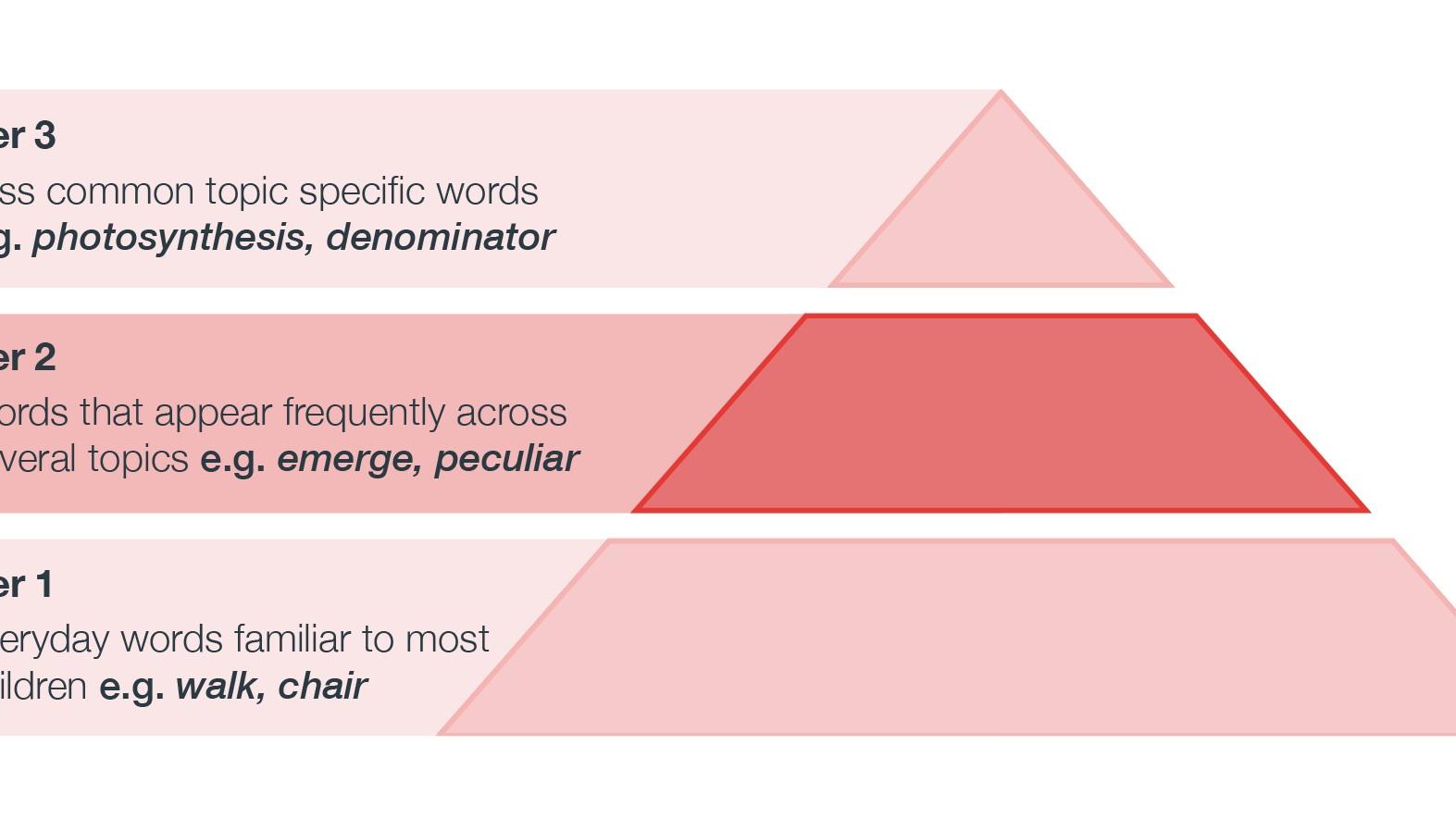
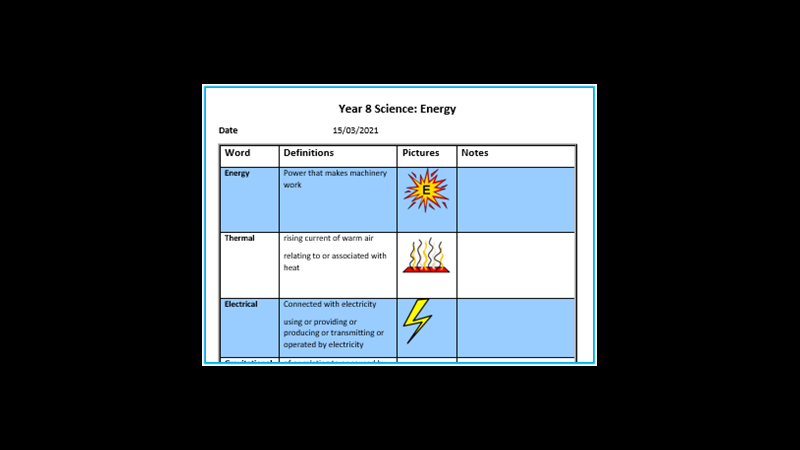
Vocabulary can be categorised into three tiers.
Tier 1 is basic vocabulary that pupils will encounter and use in everyday speech, such as house, dog, walk, shout.
Tier 2 vocabulary are words that are high frequency but may have multiple meanings or be descriptive words and are a feature of mature language users. These words are often found in literature and will have an impact on a pupil’s comprehension such as contrast, paragraph, formidable, negligent.
Tier 3 vocabulary words are low frequency and context specific. At post primary level, a pupil will need to know and understand many Tier 3 words which are subject-specific, such as abbreviation, equivalent, molecule, equilibrium.
| Impact on Reading | Recommendations for Reasonable Adjustments |
The pupil may have poor vocabulary knowledge
The pupil may often use the wrong words, confusing the meanings
|
Read and Write Quick Reference Guide for Google Chrome Read and Write for Windows: Support Tools for Students with Dyslexia
|
The pupil may lack interest in reading around subjects independently
He / she may lack prior subject / topic knowledge
He / she may be confused over similar words used in a different context in one subject area than another, for example, the word ‘factor’
|
|
The pupil simple language in oral tasks or written tasks
|
|
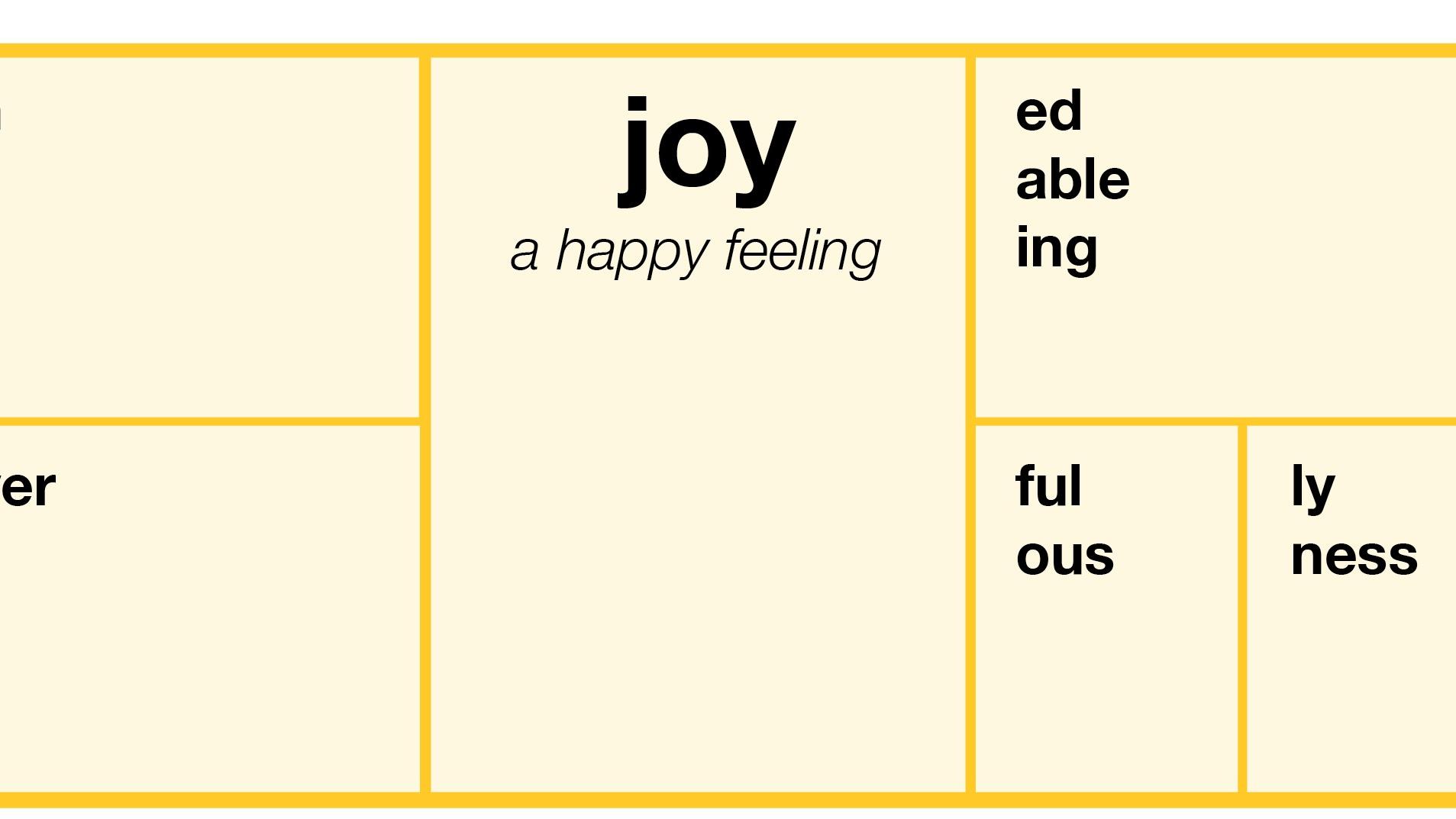
Word study is the systematic and explicit teaching of the study of words and how they work. The three principal areas are morphology, etymology and syntax and these can be incorporated into lessons incidentally or taught explicitly with subject vocabulary. A significant proportion of the subject specific vocabulary we use in the post primary sector has ancient Greek and Latin origins. In Science and Maths, the proportion can be as high as 90%. Academic vocabulary helpfully includes common word roots (such as, ‘geo’ or ‘bio’), prefixes (such as ‘un’ and ‘re’) and suffixes (such as, ‘ing’ and ‘ed’). Teachers can use approaches to vocabulary instruction based in etymology and morphology to help pupils understand and remember new words. Etymology is the study of the origin of words. Morphology is the study of the structure and parts of words.
| Impact on Reading | Recommendations for Reasonable Adjustments |
|---|---|
The pupil may have under-developed morphological awareness
The pupil may find it difficult to use appropriate tenses
He / she may find it difficult to identify grammatically correct sentences
The pupil may confuse syntax and the use of verbs and nouns when reading, which impacts on understanding
|
Teacher Guidance: Advice for Teachers on Spelling Rules
|
The pupil may be unsure of homophones and their meanings
The pupil may be unsure of word origins and how this impacts on specific words
|
Teacher Guidance - Greek and Latin Etymology (Word Origins) Teacher Guidance - Days of the Week Etymology Teacher Guidance - Science Root Words
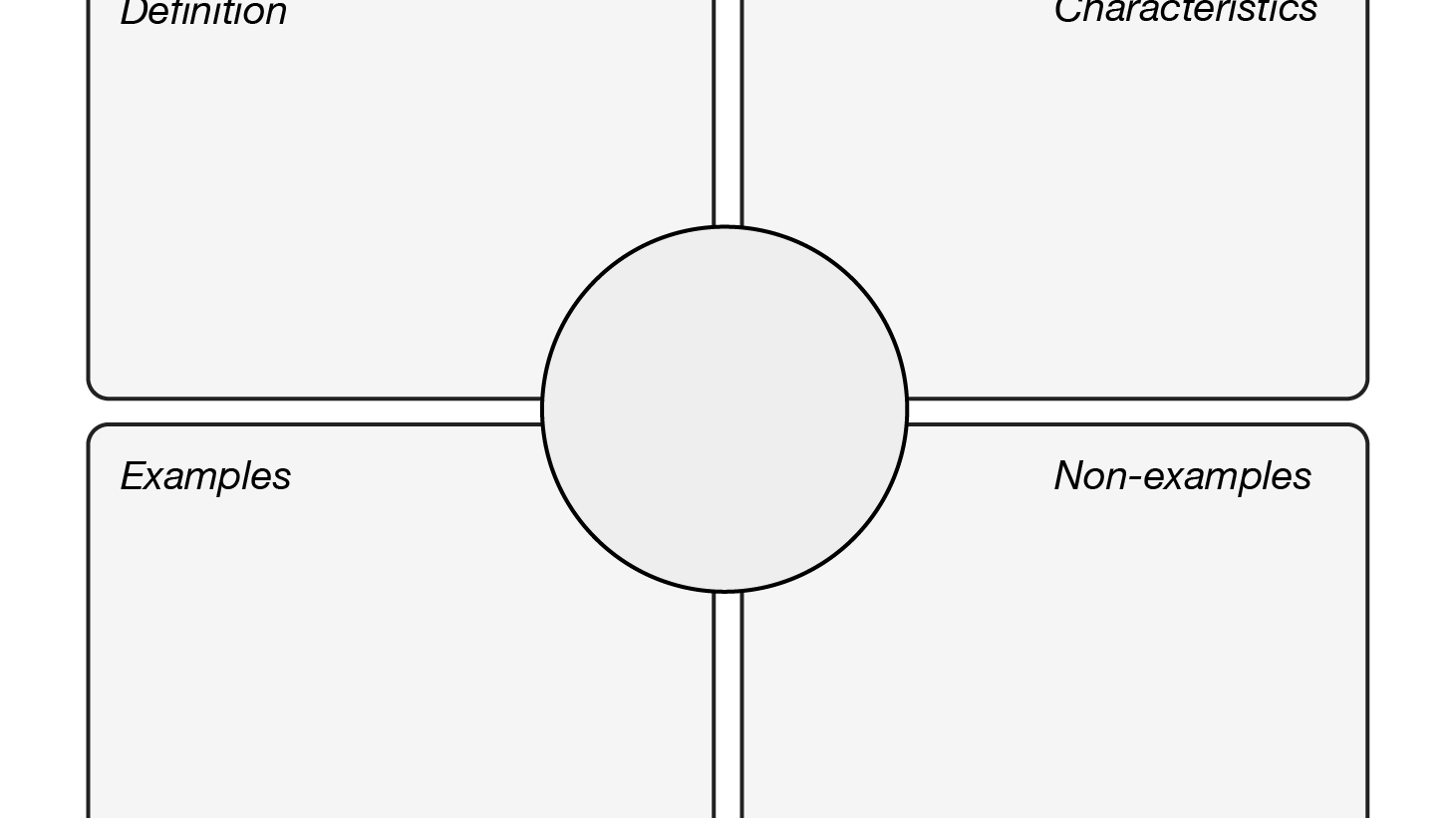
Figure 14: The Frayer Organiser (unworked example) from EEF Document - Teaching Literacy in KS 2
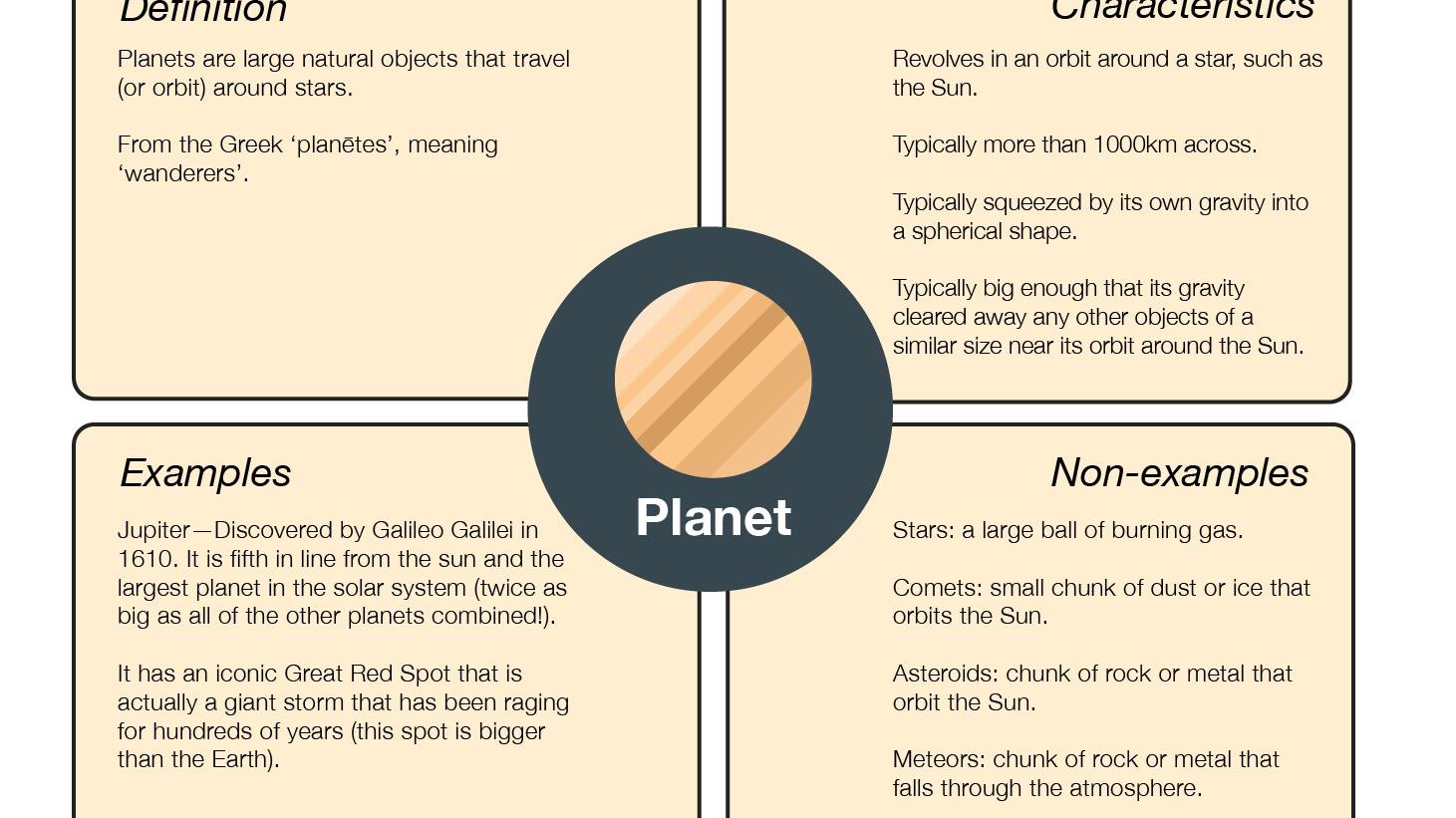
Figure 15: Frayer Organiser: A worked copy from EEF Document - Teaching Literacy in KS 2 |
Reading fluency involves reading with accuracy, automaticity, and prosody (use of appropriate stress and intonation). Fluent reading is therefore the bridge between word recognition and text comprehension. Very often, a pupil in primary school can read fluently due to the genre of text used such as narrative fiction whilst the fluency of a post primary pupil can be hampered due to demands of the post primary curriculum and introduction of information texts. Pupils with literacy difficulties will continue to struggle in the post primary sector and many of the same cognitive difficulties may be apparent, for example, working memory difficulties and underperforming phonological and orthographic processors. Pupils with specific literacy difficulties may still spend a great deal of energy in decoding texts.
| Impact on Reading | Recommendations for Reasonable Adjustments |
|---|---|
The pupil may struggle with accurate decoding
|
|
The pupil’s reading is stilted and hesitant
The pupil may be unable to read many words on sight
|
EA Guidance Video: Reading Consolidation Exercise (4:45 mins)
|
The pupil may be unable to understand more information text and subject -specific keywords
The pupil may be unaware of terms such as, the root word, the prefix or the suffix |
Figure 13: Morphology Planner - from EEF Document - Teaching Literacy in KS2 |
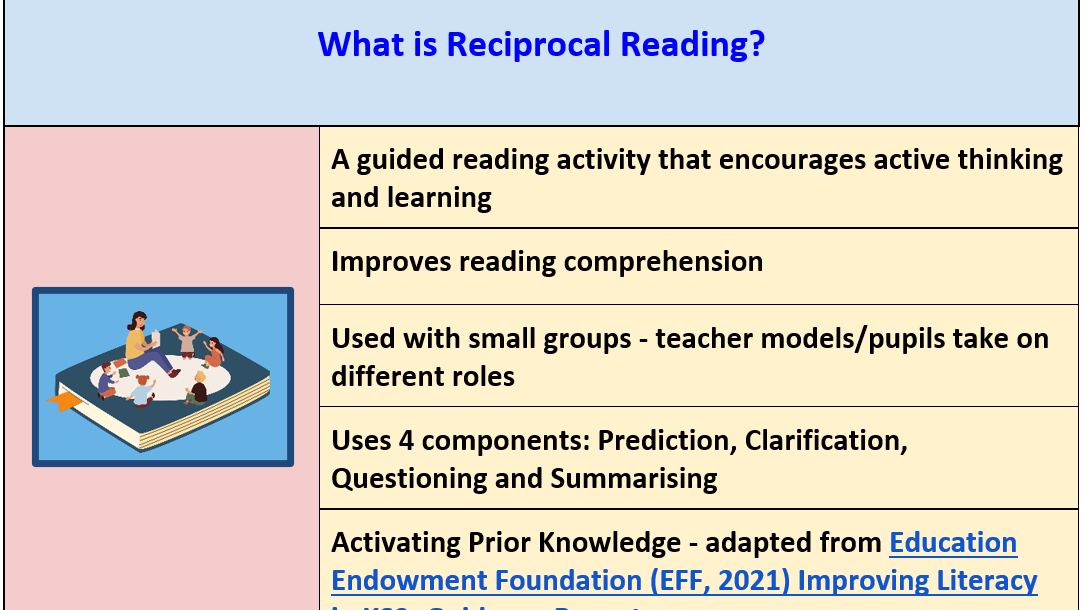
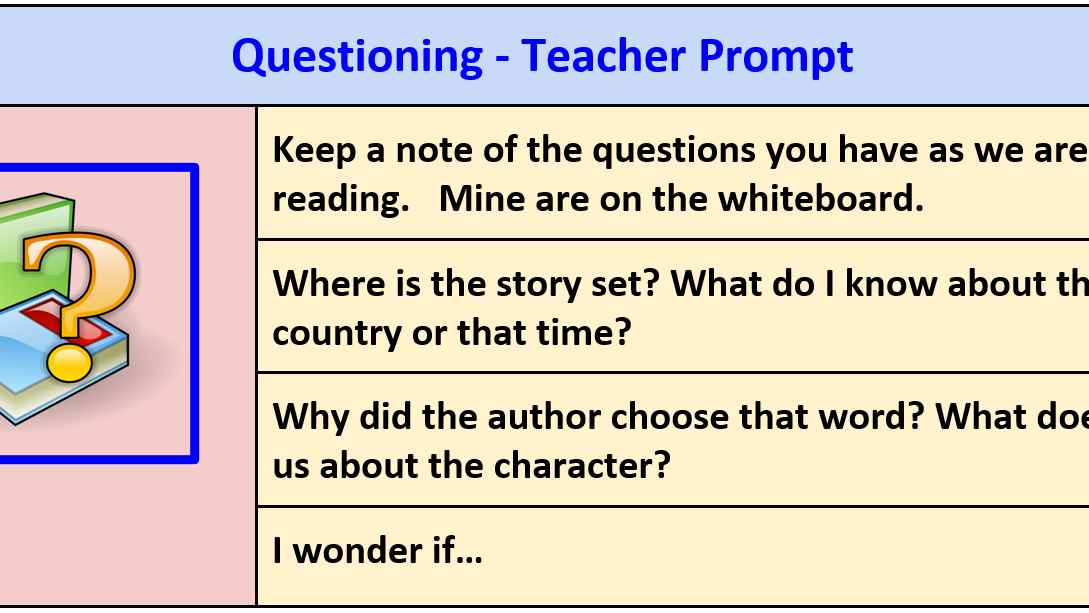
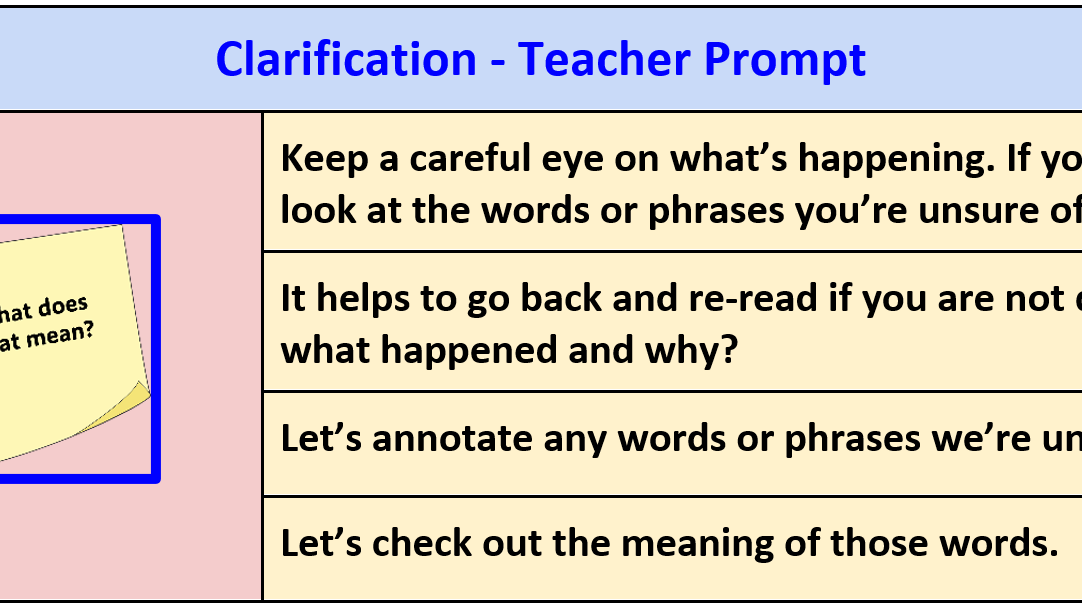
Comprehension of text is the goal of reading. It makes sense that a pupil with poor decoding, fluency and vocabulary will struggle to fully understand the text. By addressing these needs, comprehension will improve. However, it must not be assumed that because a pupil can read the text accurately that comprehension is in place. Comprehension strategies need to be taught explicitly across the curriculum to provide the pupil with the necessary skill of understanding the content. The terms ‘comprehension skills’ and ‘comprehension strategies’ are sometimes used interchangeably. Skills are what the pupil needs to be able to do to achieve comprehension independently, whereas strategies are the tools he / she employs to get there. In other words, we develop skills by teaching skills
There are various comprehension strategies that can be taught, and the aim is for the pupil to find which works for them in a particular subject area. A pupil may use more than one strategy when working on one piece of text. Comprehension strategies are developed by:
When teaching a new strategy, the following steps should be taken to enable the pupil to use it independently:
| Impact on Reading | Recommendations for Reasonable Adjustments |
|---|---|
The pupil is unsure of how to interpret narrative text
The pupil may be a newcomer pupil who is struggling with a second language
|
|
The pupil may have a difficulty in answering or discussing text
|
EA Guidance Video: Reading Consolidation Exercise (4:45 mins)
|
The pupil may struggle to relate text to events in his / her own life and be unable to make connections
Pupil may struggle to identify inference in the text
Unable to think flexibly or creatively due to co-occurring difficulty such as Autism
The pupil may become disinterested easily due to co-occurring difficulty such as ADHD or difficulties with Executive Function and Working Memory
|
Printable Resource: Visualisation - Reading Prompt Chart
Printable Resource: Mind Map (Bubble Format)
|
| The pupil may struggle to summarise the text |
|
Continue to monitor pupil’s reading ability by providing reading challenges, such as, checks on - key subject knowledge, specific keywords, prose reading, retrieval practice and quizzes (reading challenges will help the pupil store information in the long-term memory and instil a positive attitude to learning).
As pupils learn in diverse ways, teachers may need to adopt alternative methods to help reduce or by-pass pupil’s learning difficulties. An inclusive learning environment needs to be established, where pupils will benefit from using accessibility tools and technology to help them access the curriculum. Some examples of beneficial software are:
For information on using the software in external exams there is further information available in the chapter on Access Arrangements.
The following professional learning modules may be helpful for additional information regarding the strategies recommended in this chapter. They are provided by the Literacy Service and are available through the Children and Young People's Services Professional Learning Programme, which is hosted on the EA website. The access code to the courses is updated each year and shared with your Principal in September:
Duke, N. K., & Cartwright, K. B. (2021). The science of reading progresses: Communicating advances beyond the simple view of reading. Reading Research Quarterly, 56, S25-S44. https://ila.onlinelibrary.wiley.com/doi/epdf/10.1002/rrq.411
Education Endowment Foundation: Improving Literacy in Secondary Schools
Shanahan, T. & Shanahan, C. (2012) What is Disciplinary Literacy and Why Should it Matter?
Intercultural Education Service
Henry, M.K. (2010) ‘Unlocking Literacy’. Baltimore: Paul Brooks Publishing Co
Jones, K. (2021) ‘Retrieval Practice: Resource Guide.’ Suffolk: John Catt Educational Ltd
Murphy, J. and Murphy, D. (2018) ‘Thinking Reading’. Suffolk: John Catt Educational Ltd
McGeown, S., Oxley, E., Practice Partners, L. t. R., Ricketts, J., & Shapiro, L. (2023). ‘Working at the intersection of research and practice: The love to read project’. International Journal of Educational Research, 117, 102134
Paige, D. D. (2011). ‘16 Minutes of “Eyes-on-Text” Can Make a Difference: Whole-Class Choral Reading as an Adolescent Fluency Strategy’. Reading Horizons: A Journal of Literacy and Language Arts, 51 (1)
Reid, G. and Clark, J (2021) ‘Dyslexia Workbook for Teens’. California: Rockridge Press
Reid, G. (2010) ‘Learning Styles and Inclusion’. London: Sage Publications
Ricketts, J., Dawson, N., Taylor, L., Lervåg, A., & Hulme, C. (2020). ‘Reading and oral vocabulary development in early adolescence’.
Stone, L. (2021) ‘Spelling for Life’. Oxon: Routledge Scientific Studies of Reading, 24(5), 380-396. doi:10.1080/10888438.2019.1689244
Ricketts, J., Jones, K., O'Neill, P., & Oxley, E. (2022). ‘Using an assessment decision tree to align students’ reading needs to support in school’.