Image

Age 4 - 6
Early language development plays a central role in the development of literacy skills in the Foundation Stage. The importance of developing good attention and listening skills is central to the development of good receptive and expressive language skills. Pupils with literacy difficulties may have a co-occurring difficulty in Developmental Language Disorder (DLD) or a hearing impairment and they may also have an under-performing working memory, phonological and orthographic processor, so it is imperative that this is taken into consideration when planning lessons.
Teachers should strive to plan for and develop all four levels of phonics knowledge, beginning with phoneme/grapheme correspondence and progressing to phonics teaching at the orthographic level, syllables, onset and rime and irregular whole word.
In the Foundation stage, there will be an emphasis on developing the alphabetic principle which is teaching letter names and sounds. Pupils need to be able to recognise letters with accuracy and speed to support them in learning the sounds associated with them. This is best achieved through systematic and explicit teaching to establish the sound-symbol relationships. Many pupils with specific literacy difficulties will continue to struggle to learn all the letter names and sounds and many will have significant difficulty identifying the vowel sound unless it is attached to a consonant, for example, “an”, “in”, “on”. It is very important that in the first year of school pupils learn the names of all of the letters of the alphabet. The letter name is the only consistent attribute as the shape changes (upper / lower case) and for many letters there is more than one sound. Letter names, sounds and shape/directionality in writing should be taught at the same time.
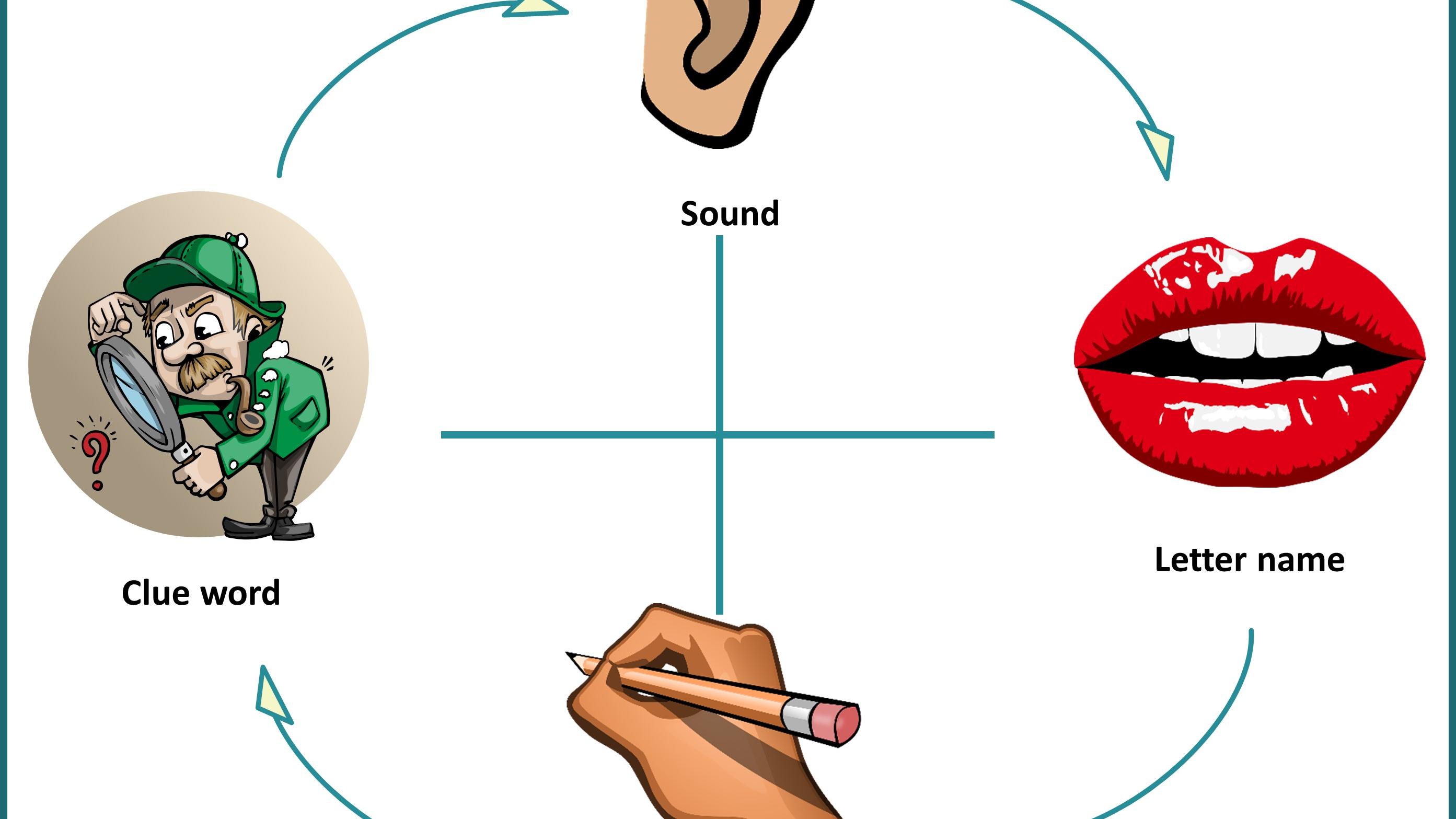
All letters have four properties: name, sound, shape and feel (the sensation of muscle movements while writing the letter or while producing the sound). The name is the only property that does not change. The name of the letter is the anchor to which the pupil can attach its other properties. Pupils learn the alphabet through exploration of the relationships between letter names, the sounds of the letter names, their visual characteristics, and the motor movements involved in their formation. This results from direct instruction and multiple exposures to print.
Pupils need to practise letter names and alphabet sequences every day as a whole group activity, in the Foundation Stage classrooms. Pupils with literacy difficulties need over learning. Five minutes at the start of each day in the Foundation Stage that is given over to learning the alphabet will pay huge dividends for many pupils. It will support the pupils in memorising the alphabet and especially any pupil who may have working memory difficulties. The routine will build automaticity in saying the alphabet and recalling letter names. Repetition and overlearning are vital to embed the alphabet knowledge in long term memory. Research has established that pupils who know the names of the letters of the alphabet learn letter-sound links more readily.
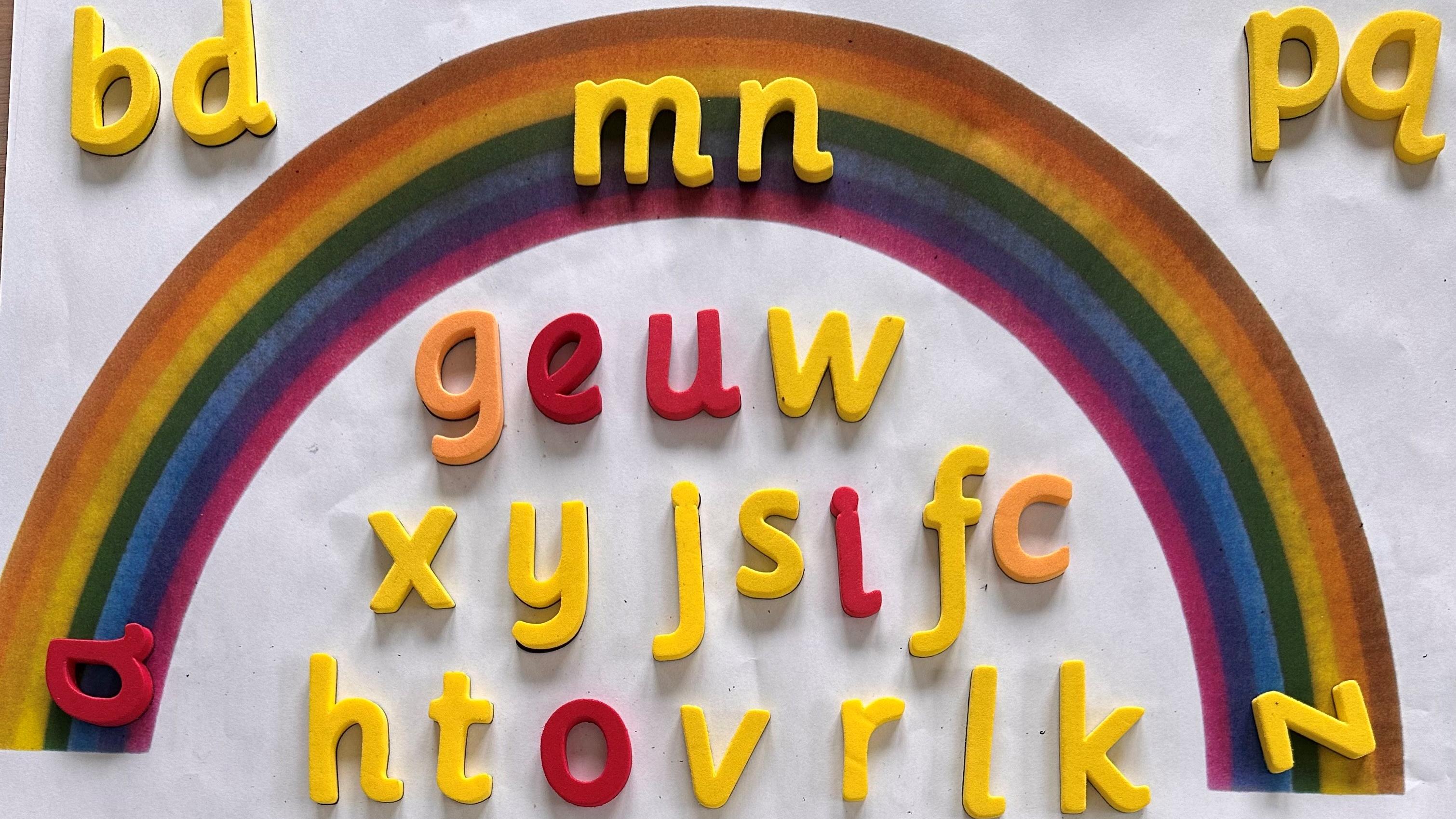
Teach pupils how to set up the alphabet arc ready for sequencing.
a, z, sit on the arc. Explain ‘a’ comes first (say “a” as in acorn for letter name) and ‘z’ is last.
‘m’, ‘n’ sit on the arc as they are the middle letters in the alphabet.
Confusing letters ‘b’ and ‘d’ top left and ‘p’ and ‘q’ top right
The rest of the letters mixed in the centre:
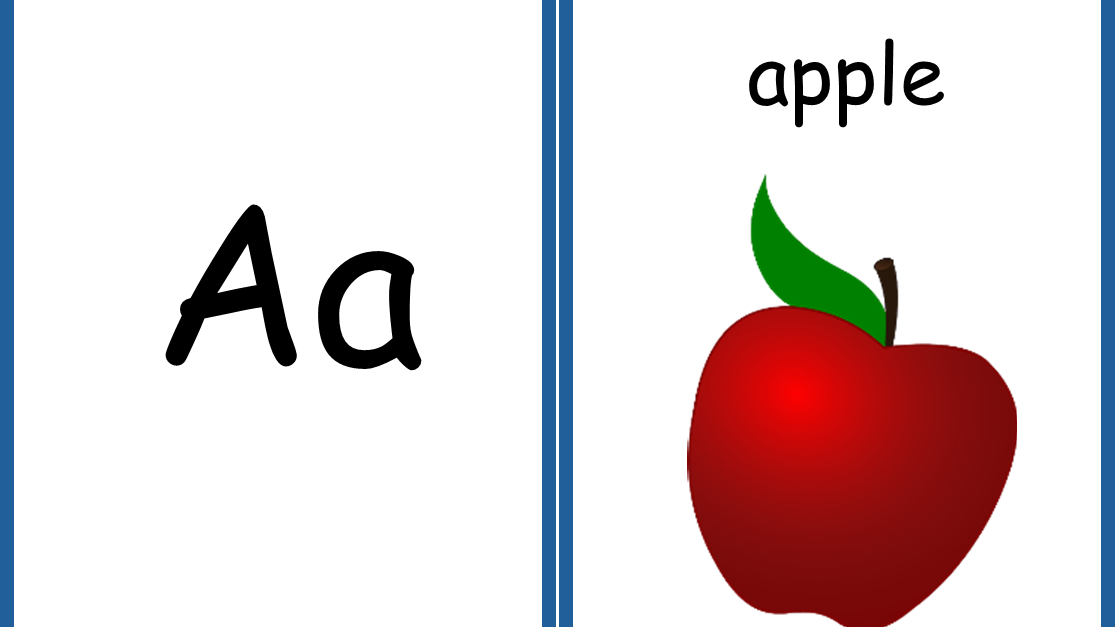
Establish one-to-one correspondence linking each sound to a visual symbol in a left to right direction around the alphabet arc using large magnetic letters. It is essential to say each sound as you touch each letter. Point out the vowels. Reinforce the short vowel sounds using visual picture clues above the large alphabet: apple, elephant, igloo, orange, umbrella. Use real objects if possible. Say each letter’s name as you touch it -going around the alphabet arc. Some pupils will need the support of the alphabet melody for longer than others. Below are some activities to reinforce and consolidate learning:
Using the alphabet arc place the letters in the wrong order to see who can spot the mistake (work within a quartile to avoid confusion)
Use vowel sound objects that the pupil can feel and touch
Use “I spy… find an object that begins with a certain sound
Guide for parents on teaching phonics (grapheme/phoneme knowledge):
Teacher Guidance: Alphabet Arc Activities
EA Guidance Video: Auditory Sequential Memory (3:01mins)
Phonological awareness difficulties are difficulties with identifying and sequencing the sounds within a word. This leads to challenges when manipulating, blending and segmenting sounds to read and spell. There may be a difficulty with identifying ‘rhymes’. Phonological awareness can be severely affected by hearing impairment or developmental language difficulties but may also be impacted by working memory or executive function difficulties.
| Impact on word recognition, spelling and writing | Recommendations for Reasonable Adjustments |
|---|---|
The pupil may find it difficult to learn and retain new grapheme/ phoneme knowledge (determining what sounds are associated with a letter)
The pupil may have a difficulty with letter recognition (the ability to recognise letter shapes and associating the particular shape with a letter) |
Teacher Guidance: Alphabet Arc Activities
Image
|
| The pupil may have difficulty discriminating between the vowel sound |
|
| Difficulty sequencing the letters alphabetically |
|
The pupil may struggle to remember what a specific letter looks like, HFWS or topic words
The pupil may have difficulty in discriminating between final consonant sounds such as /d/, /t/ and /p/ for example, reads “cot” as “cod”
The pupil may struggle with identifying letters, such as, ‘b’, ‘d’, ‘p’ and ‘q’, therefore there is confusion over the sound |
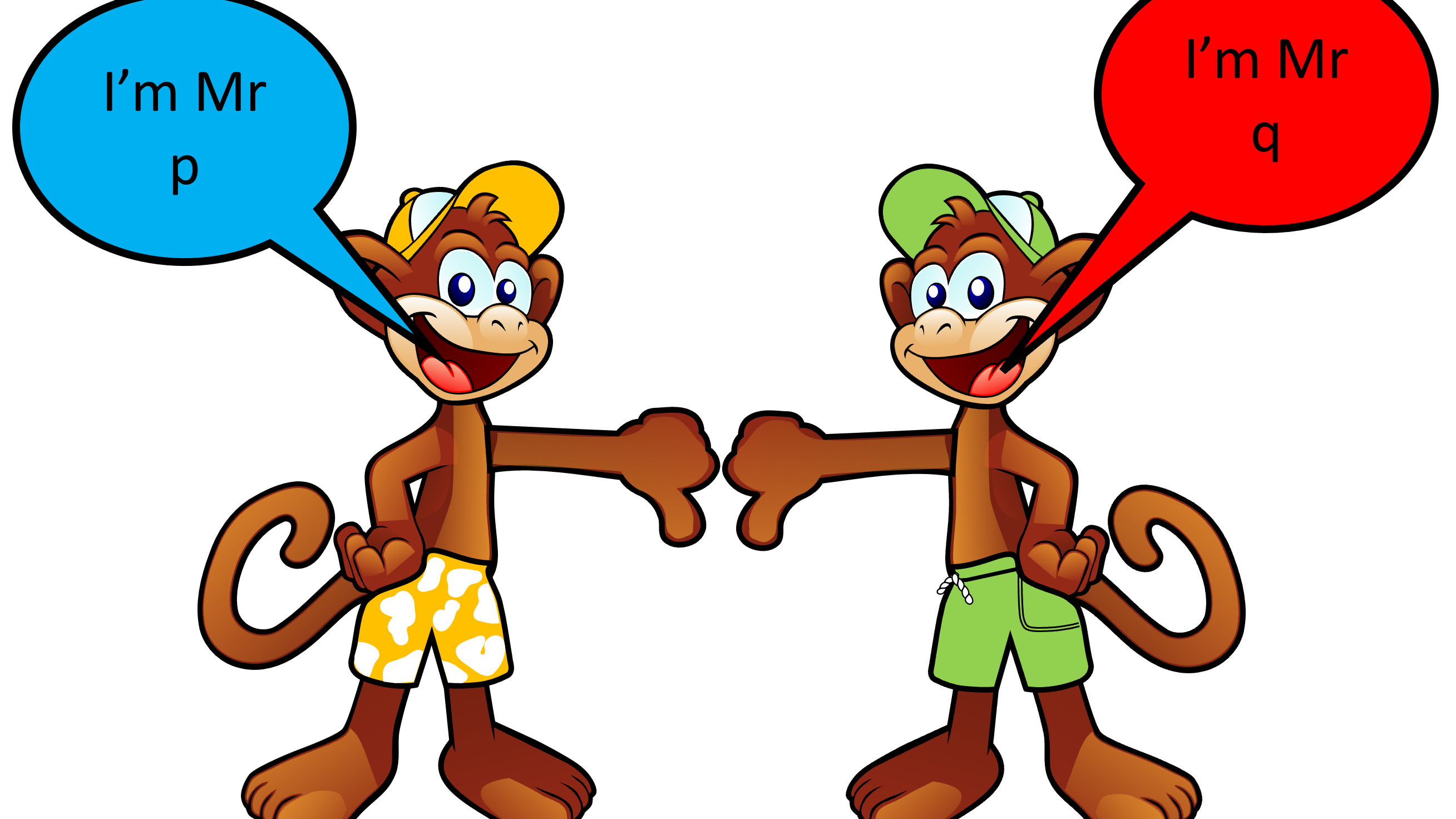
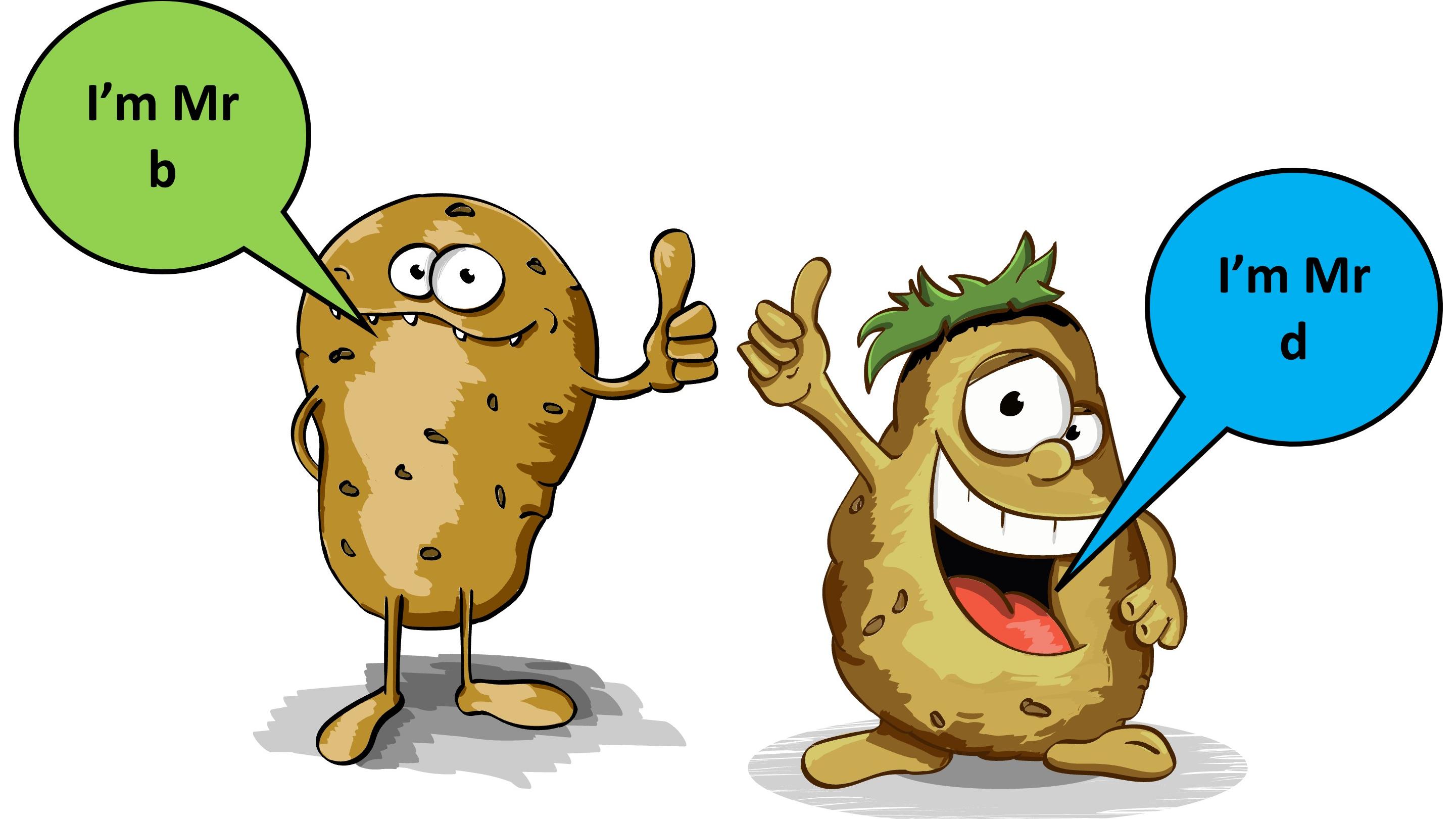
Explain that in the alphabet arc Mr ‘b’ comes first and he must face Mr ‘d’ who comes after ‘c’, as he wants to chat’; ‘b’ and ‘d’ stare at each other and poor ‘c’ is stuck in the middle. Then comes Mr ‘p’ who needs to face Mr ‘q’ also to chat. The teacher can model this using his / her thumbs and demonstrate the 2 letters chatting. Make sure to explain the left hand comes first (some pupils will require explicit teaching of methods to identify their left/ right hand): Image
|
| The pupil may have difficulty with the sequencing of sounds in words and identifying the sounds within a word |
|
| The pupil may have difficulty with blending and segmenting sounds |
Simultaneous Oral Spelling Instructions |
| The pupil may have a difficulty with counting syllables in a word |
|
The pupil may have a difficulty with identifying ‘rhymes’ and ‘alliteration’
The pupil may struggle to produce words that rhyme or have the same beginning sound |
|
The pupil may have difficulty retaining new concepts and they often appear to have been forgotten by the next day The pupil may have difficulty remembering new words, which can impact on vocabulary development and overall language skills |
|
| Pupil finds it difficult to apply new leaning of concepts to reading and spelling tasks |
Printable Resource: COPS Proof-Reading for Dictated Sentences Printable Resource: COPs Proof - Reading Prompt |
| The pupil is unable to spot differences in beginning sounds |
|
Working memory difficulties may make the blending of more than two phonemes beyond the capacity of 5–7-year-old pupils. Phonics teaching at the onset and rime level, facilitates the development of orthographic knowledge because pupils learn to recognise on sight, orthographic patterns, that is clusters of letters representing clusters of phonemes.
| Impact on word recognition, spelling and writing | Recommendations for Reasonable Adjustments |
|---|---|
Difficulty learning the alphabet - both letter names and sounds
Difficulties with storage and retrieval of letter/sound knowledge |
Teacher Guidance: Alphabet Arc Activities
EA Guidance Video: Introduce the flashcard and flashcard routine (1:03 mins)
|
| Unable to remember alphabetical order |
|
| The pupil finds it difficult to recognise the vowel sounds |
|
The pupil may be unable to remember what specific letters look like, HFWs or topic words
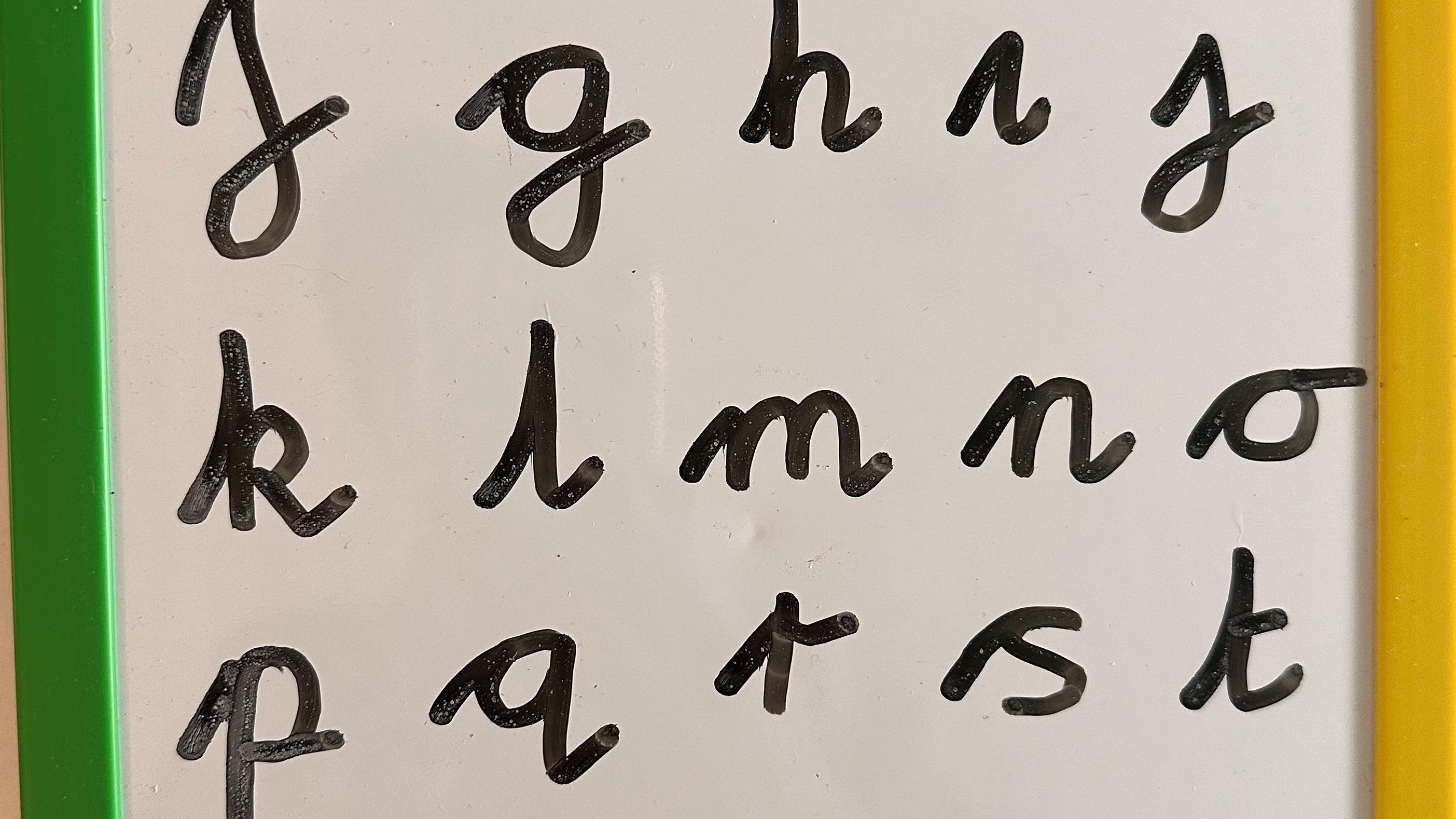
Often unable to visually discriminate between ‘b’, ’d', ’p’, ’q’ |
Image
|
| The pupil may have a difficulty holding several sounds in his / her short-term memory (auditory sequential memory) in order to complete an activity |
EA Guidance Video: Auditory Sequential Memory (3:01mins)
|
| Difficulty with holding memory of a letter sequence or word in short- term memory (visual sequential memory) in order to complete an activity |
|
| The pupil may have difficulty remembering the multiple mappings for phonemes |
|
| The pupil may find it difficult to retain and spell HFWs |
EA Guidance Video: Introduce the flashcard and flashcard routine (1:03 mins) |
The pupil may have a difficulty blending due to inefficient storage of sounds in long-term memory
The pupil may struggle to unitise sounds |
|
The pupil may struggle to maintain attention
The pupil may struggle to apply new learning to reading activities |
|
Difficulties with hearing the differences between similar sounding phonemes. Pupils may have difficulty discriminating between sounds such as ‘b’ and ‘p’, ‘m’ and ‘n’. The pupil may frequently mishear or misunderstand verbal instructions leading to confusion and frustration in the classroom. He / she may have difficulty recognising and producing rhyming words or identifying patterns in words that have similar sounds.
| Impact on whole word recognition, spelling and writing | Recommendations for Reasonable Adjustments |
|---|---|
The pupil may have difficulty concentrating when a lesson is being introduced
He / she may be easily distracted by anything happening in the classroom |
|
The pupil may have difficulty discriminating between vowel sounds
Vowel sounds are not pronounced correctly and therefore decoding is incorrect, for example, the pupil may read ‘jug’ for ‘jog’ |
|
The pupil may find if difficulty to discriminate between consonant sounds (for example, b and p, t and d, m and n)
He / she may read words incorrectly, such as, ‘cot’ for ‘cod’ |
|
| The pupil may be unable to remember individual sounds in words if it goes beyond two sounds and this in turn makes it difficult to manipulate or blend |
|
The pupil may be unsure what a syllable is
Difficulties with counting syllables in a word
The pupil may find it difficult to distinguish between whole words, onset rimes, syllables, and phonemes |
|
| Difficulty recognising rhyme |
|
Processing speed refers to the ability to process information efficiently and accurately, lack of automaticity when recalling grapheme / phoneme knowledge leads to slow laboured decoding and encoding of sounds when reading and spelling. It requires a lot of mental energy and is stressful and exhausting for the pupil. New concepts may require repetitive consolidation until they become secure.
| Impact on whole word recognition, spelling and writing | Recommendations for Reasonable Adjustments |
|---|---|
Takes longer to process the spoken word The pupil may take longer to process stored vocabulary He / she may find it difficult to maintain attention and may become distracted during tasks that require sustained attention |
|
The pupil may have inefficient access to stored information so writing and spelling are impacted due to retrieval difficulties
The pupil may default constantly to sounding out every phoneme in a word and be unable to use any other strategies to help |
|
| The pupil may forget the instructions given and as a result is unable to begin a task |
|
Orthographic processing difficulties are difficulties recognising patterns in written words that represent clusters of phonemes blended and recognised as one unit. Pupils with literacy difficulties struggle to learn words implicitly from reading therefore they need to be explicitly taught word patterns.
| Impact on whole word recognition, spelling and writing | Recommendations for Reasonable Adjustments |
|---|---|
The pupil may be reading words laboriously sound by sound
He / she may have poor reading fluency |
Teacher Guidance: Reading Fluency
|
The pupil may have difficulty recognising spelling patterns / word patterns
He / she may have difficulty identifying and manipulating sounds in words |
|
The pupil may have difficulty recalling high frequency words and irregular spelling words
Difficulty recognising and applying common spelling patterns and rules |
|
The following professional learning modules may be helpful for additional information regarding the strategies recommended in this chapter. They are provided by the Literacy and Language and Communication Services and are available through the Children and Young People's Services Professional Learning Programme, which is hosted on the EA website. The access code to the courses is updated each year and shared with your Principal in September:
Language and Communication Service
BDA Dyslexia Good Practice Guide Ed 2 2018
Alloway, T.P. & Alloway, R.G. (2015). ‘Understanding Working Memory’ (2nd Edn). Sage.
Burgoyne, K., Gardner, R., Whitely, H., Snowing, M.J. and Hulme, C. (2018) ‘Evaluation of a parent delivered early language enrichment programme. Evidence from a randomised controlled trial’ Journal of Child Psychology and Psychiatry 59, 545-555
Georgiou, G.K., Martinez, D., Vieira, A.P.A. & Guo, K. (2021) ‘Is orthographic knowledge a strength or a weakness in individuals with dyslexia? Evidence from a meta-analysis’. Annals of Dyslexia, 71:5–27 https://doi.org/10.1007/s11881-021-00220-6
Hayiou-Thomas, M.E., Carroll, J.M., Leavett, R., Hulme., C. and Snowling, M.J. (2017) ‘When does speech sound disorder matter for literacy? The role of disordered speech errors, co-occurring language impairment and family risk of dyslexia. Journal of Child Psychology and Psychiatry’ 58, 197-205
Koutsouris, Norwich & Bessudnov (2021), ‘Interpreting RCT, process evaluation and casestudy evidence in evaluating the Integrated Group Reading (IGR) programme: a teacher-led, classroom-based intervention for Year 2 and 3 pupils struggling to read. Educational review.’ VOL. 73, NO. 3, 346–373. https://doi.org/10.1080/00131911.2018.1557597Routledge
Kelly, K. & Phillips, S. ‘Teaching Literacy to Learners with Dyslexia- A Multisensory Approach’ (2022) Sage
Lavan, G. & Talcott, J. B (2021). ‘Brook’s what works for literacy difficulties?’ https://www.theschoolpsychologyservice.com/wpcontent/uploads/2020/11/The-CSP-6th-Ed.pdf
McMurray, S. (2020). ‘Learning to spell for children 5-8 years of age: the importance of an integrated approach to ensure the development of phonic, orthographic and morphemic knowledge at compatible levels’. Dyslexia, 26:4, 442-458 https://doi.org/10.1002/dys.1663
McMurray, S (2022) ‘Why systematic synthetic phonics (SSP) alone cannot meet the needs of all children’. The Dyslexia Handbook 2022, 124-126 Reading: England. BDA
Squires, K. E. and Wolter, J. A. (2016) ‘The Effects of Orthographic Pattern Intervention on Spelling Performance of Students with Reading Disabilities: A Best Evidence Synthesis’. Remedial and Special Education, 37(6), pp. 357-369.
Wolter, J. A., & Dilworth, V. (2013). ‘The effects of a multilinguistic morphological awareness approach for improving language and literacy’. Journal of Learning Disabilities, 47(1), 76–85.
Wyse, D. & Bradbury, A. (2022) ‘Reading wars or reading reconciliation? A critical examination of robust research evidence, curriculum policy and teachers' practices for teaching phonics and reading’. Review of Education. 10 (1), Article e3314. 10.1002/rev3.3314.