Image

This chapter focuses on the area of Study Skills and highlights the significance of environmental factors and the cognitive processing difficulties experienced by a significant minority of pupils. In order to fully understand the importance of Study Skills, in the development of a pupil/ young person, it is beneficial to read the full introduction, before selecting the sector which is most relevant. Pupils may be at various stages on a continuum of development therefore it is important to consider strategies and approaches across the sectors.
Study skills are the skills that a person needs to be able to study and learn effectively. The implementation of a formalised study skills programme becomes increasingly important as a learner progresses through the various stages of education and the expectation of a more independent approach to learning becomes greater. The benefits of helping a learner experiencing literacy difficulties to develop a strong set of study skills are well documented. Knowing how to study and learn enhances pupil motivation and empowers learners. Many higher education students in receipt of the Disabled Students’ Allowance are allocated weekly sessions with a study skills coach. When study skills are taught and mastered, it can make an enormous difference to how effective a learner’s engagement with study is and – importantly – how much enjoyment can be gained from studying. The topic of study skills can be broken down into various categories including:
There are 3 liability areas:
The most effective procedure for teaching strategies includes four components:
The following advice and guidance regarding study skills is intended for staff of any education or training setting who work with learners experiencing literacy difficulties.
Helping a learner experiencing literacy difficulties to maintain high levels of personal organisation could include:
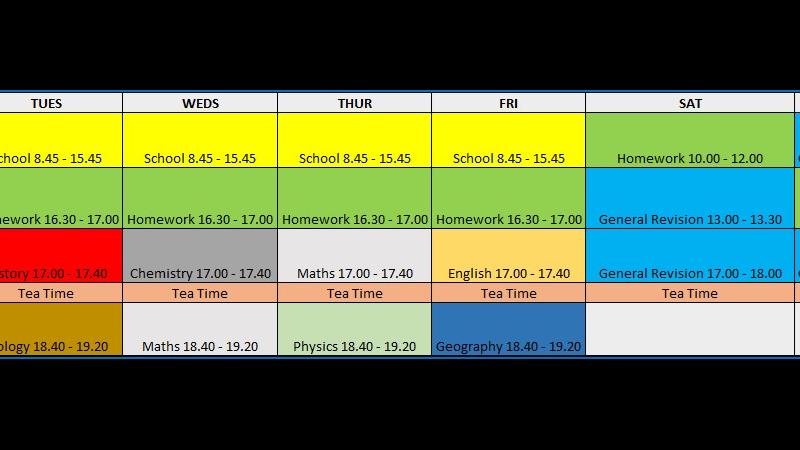
Pictured below is an example of a colour-coded revision timetable produced by a post primary pupil using Microsoft Excel, one simple example of how IT can be used to aid a learner’s organisation.
Note-taking is something that a learner experiencing literacy difficulties often struggles with and sometimes a piece of Assistive Technology is assigned to help them in this area, for example a digital voice recorder may be assigned to a higher education student to use in lectures, seminars or tutorials. Whether learners make notes independently in a traditional format, or receive some of the assistance, helping learners to develop effective note-taking techniques and determine the purpose that their notes will later serve – is a vital study skill.
Helping a learner experiencing literacy difficulties to develop effective note-taking techniques could include:
Please note that unnecessary copying and dictation should be avoided where practicable for a learner experiencing literacy difficulties.
Strategic listening is a skill that can be taught:
Teaching learners the value of utilising their reading skills to gain new knowledge, is crucial to their success in any phase of their education. Some learners experiencing literacy difficulties struggle with the skills involved with accurate and fluent reading. A learner may find their reading affected in many ways: for example, in relation to their reading accuracy, reading comprehension, or reading fluency. Whether a learner accesses text independently, using Assistive Technology, or with the assistance of another person (for example a Classroom Assistant), the mental digestion of information will always be a necessary part of education.
Helping a learner experiencing literacy difficulties to develop effective reading techniques could include:
Whether written independently by hand, via another person acting as a scribe, typed, or using speech recognition technology, the likelihood is that most learners will need to produce extended pieces of writing at some point in their educational journeys, for example essays, assignments or coursework. The skill of engaging in effective extended writing is therefore a crucial study skill. Helping a learner experiencing literacy difficulties to develop effective extended writing techniques could include:
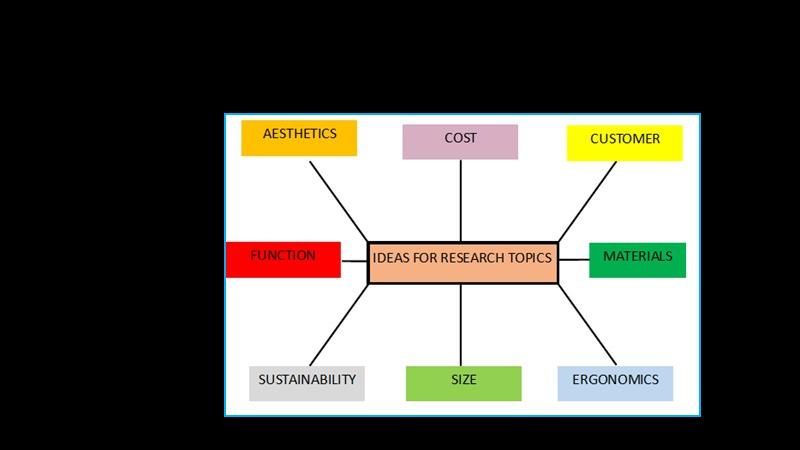
Often one of the hardest aspects of extended writing for a learner is getting started, so teaching them how to mind map their thoughts and ideas can really help. Pictured below is an example of a simple mind map that a post primary pupil studying Technology & Design has created to help them decide which areas of research they need to undertake as part of their GCSE coursework.
Whatever the extent of a pupil’s literacy difficulties and whichever access arrangements he / she might be eligible for, most pupils will need to, at some point, exhibit a skill that they have learnt or demonstrate knowledge that they have acquired, in a formal assessment such as a test or examination. Memory and revision techniques therefore constitute another important study skill. Learning strategies actively engage the pupil with the material to learn and facilitate the acquisition and processing of knowledge. When a pupil prepares effectively for a test or examination, they tend to feel in control during it. Helping a pupil experiencing literacy difficulties to develop sound memory and revision techniques could include:
All learners at some point on their educational journey will need to conduct research, to locate, evaluate, extract, organise and then utilise information in their own work. Referencing is the acknowledgement of the various sources of this information. Helping a learner experiencing literacy difficulties to develop effective research and referencing techniques could include:
Many pupils are wary of formal assessments, such as examinations, because they fear being unable to remember anything that they have revised. Helping a pupil experiencing literacy difficulties to develop effective examination techniques could include: